
GARDENING WITH NATURE
Article by Sigrie Kendrick
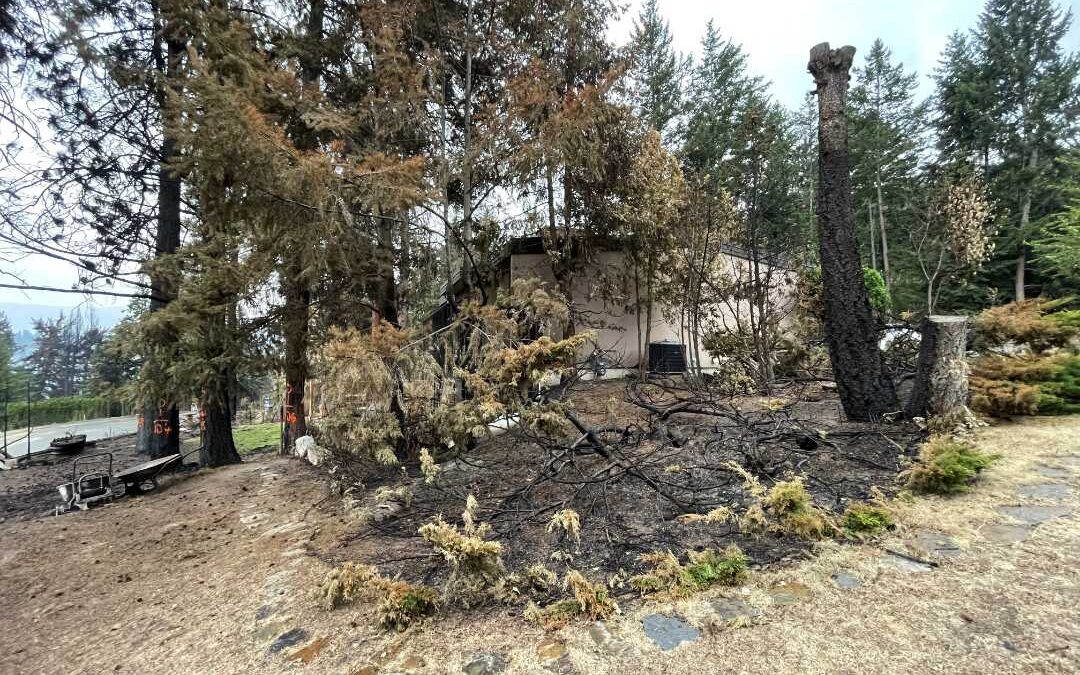
Use Fire-smart Plant Choices to Resist Wildfire
When designing landscapes in wildfire-prone areas, homeowners face the challenge of finding a balance between creating beautiful outdoor spaces while maintaining crucial fire protection for their homes.
Fortunately, several native plants offer both aesthetic appeal and FireSmart™ qualities.
Three standout choices, Mock orange (Philadelphus lewisii), Smooth Sumac (Rhus glabra), and Saskatoon Serviceberry (Amelanchier alnifolia) demonstrate that fire-wise landscaping doesn’t mean sacrificing beauty.
Visit the FireSmart website to learn about the best fire-resistant choices for your landscape.
MOCK ORANGE
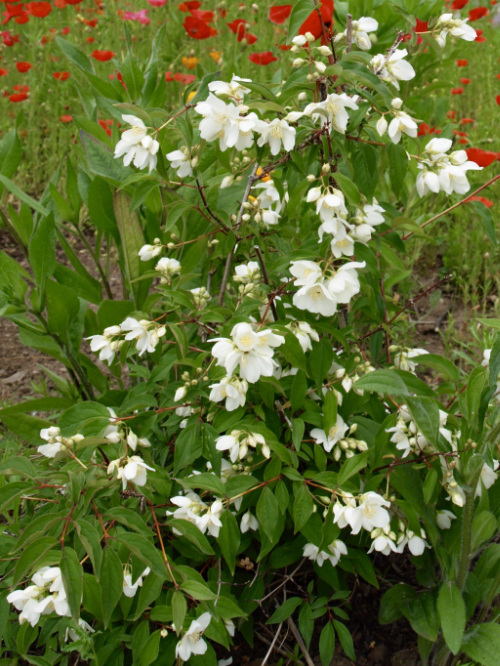
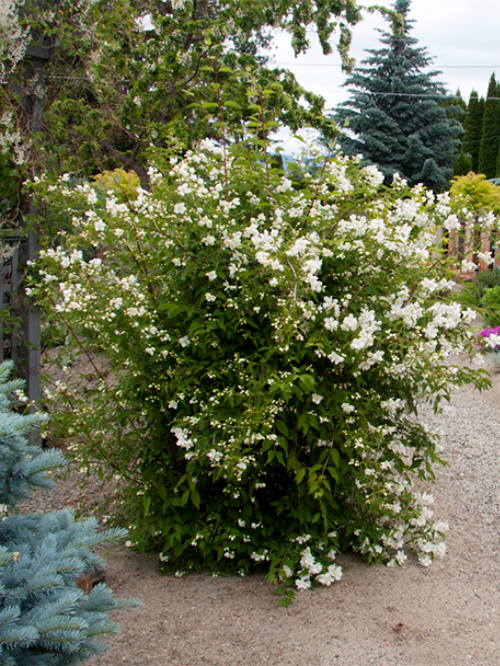
Philadelphus lewisii, our native Mock Orange, is a deciduous shrub that typically reaches six to 10 feet tall, producing masses of white, fragrant flowers in late spring that evoke the scent of orange blossoms.
It earns its place in fire-smart gardens through several key characteristics–
- From a fire-safety perspective, Mock Orange excels because of its high moisture content and low resin levels. The plant’s broad, green leaves retain substantial water content throughout the growing season, making it less likely to ignite quickly.
- Unlike many ornamental shrubs, Mock Orange doesn’t accumulate significant dead material within its structure, reducing the fuel load when properly maintained. Its deciduous nature means it naturally drops leaves in fall rather than accumulating layers of dry, flammable debris as pyramid cedars tend to.
- Mock Orange responds well to pruning, allowing homeowners to maintain open spacing between branches that helps to prevent fire from easily moving through the plant’s structure.
Position Mock Orange 1.5 to 30 metres away from a structure where it can still provide privacy and beauty without endangering your home.
If you garden in a small space, consider the diminutive cultivar ‘Snowbelle’ which reaches only three to four feet tall and wide.
SMOOTH SUMAC
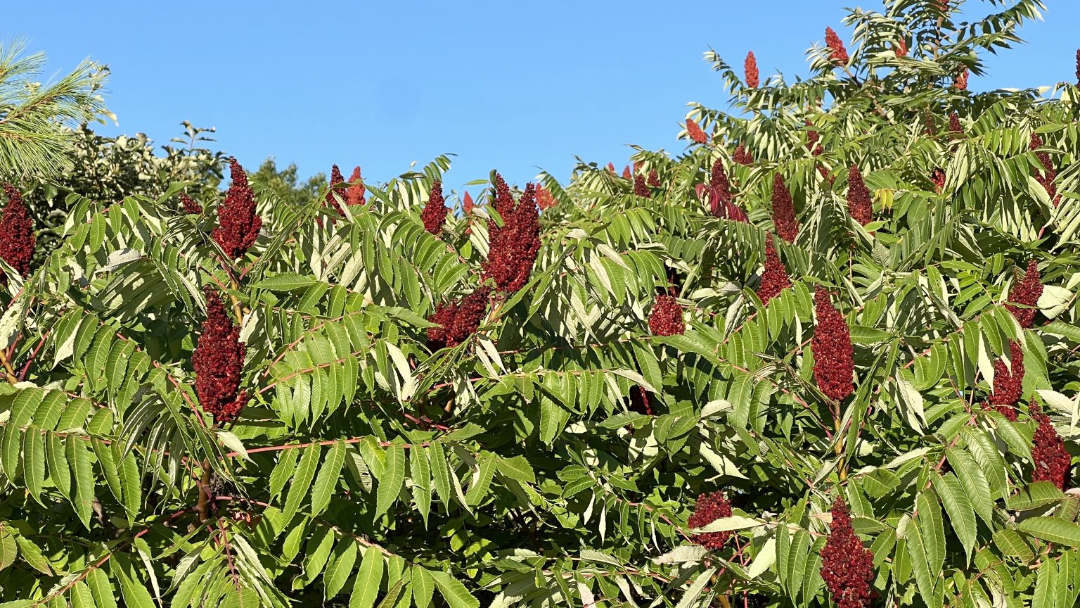
Rhus glabra, or Smooth Sumac brings both striking ornamental value and practical fire resistance to Okanagan landscapes.
This native shrub features compound leaves that turn brilliant shades of orange and red in autumn, followed by persistent crimson fruit clusters that feed overwintering birds.
Growing eight to 15 feet tall, Smooth Sumac spreads through rhizomes to form colonies, making it excellent for erosion control on slopes.
The fire-smart qualities of smooth sumac lie in its structure and composition–
- The plant maintains relatively high moisture levels in its foliage and stems during active growth.
- Its leaves are broad and flat, with smooth surfaces that don’t trap heat or encourage rapid flame spread.
- While Smooth Sumac does produce some woody material, it lacks the volatile oils found in many drought-tolerant plants.
- This species naturally self-prunes lower branches as it matures, creating vertical separation from ground fuels, a critical feature in fire-safe landscaping.
Regular maintenance enhances Smooth Sumac’s defensive qualities. Remove dead canes annually and thin colonies to prevent excessive density.
Space individual clumps of plants at least 10 feet apart to create natural firebreaks within your landscape.
SASKATOON
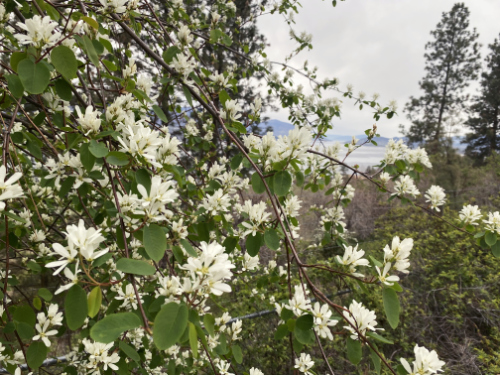
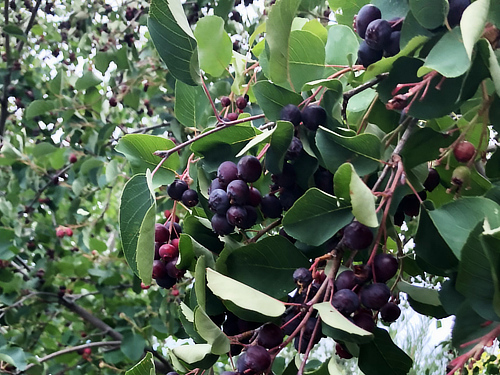
Amelanchier alnifolia, commonly known as Saskatoon, is also suitable for planting along the perimeter of the intermediate zone, which is 1.5 to 10 metres away from a structure. It possesses several characteristics that make it a valuable addition to FireSmart™ landscaping.
This native Okanagan shrub is considered a fire-resistant plant due to its high moisture content in leaves and stems, which helps slow the spread of flames.
It maintains relatively lush foliage throughout the growing season, contributing to its lower flammability rating compared to many conifers or plants with resinous leaves.
Additionally, the Saskatoon can be pruned and maintained at a manageable height, allowing homeowners to keep it as a compact shrub rather than allowing it to develop into a taller bush, which could provide ladder fuel that may carry fire from ground level into the tree canopy.
When planted as part of a well-maintained FireSmart™ landscape with adequate spacing, Amelanchier alnifolia can serve both aesthetic and protective functions, offering beautiful white spring flowers followed by edible berries while contributing to a defensible space around structures in our wildfire-prone valley.
All three of these plants share critical FireSmart™ characteristics– high moisture content, low volatile oil production, deciduous habits that prevent excessive dead material accumulation, and growth habits that make them amenable to maintenance pruning.
Combine them throughout your defensible space, maintaining adequate spacing that prevents fire from jumping between bushes.
Remember that even fire-resistant plants require proper maintenance, such as regular removal of any dead material.
With these three beautiful fire-smart plant choices, you can create a landscape that’s both defensible from fire and drought-tolerant.
Sigrie Kendrick is a master gardener and executive-director of the non-profit Okanagan Xeriscape Association.