
PLANT OF THE MONTH- APRIL
by Sigrie Kendrick
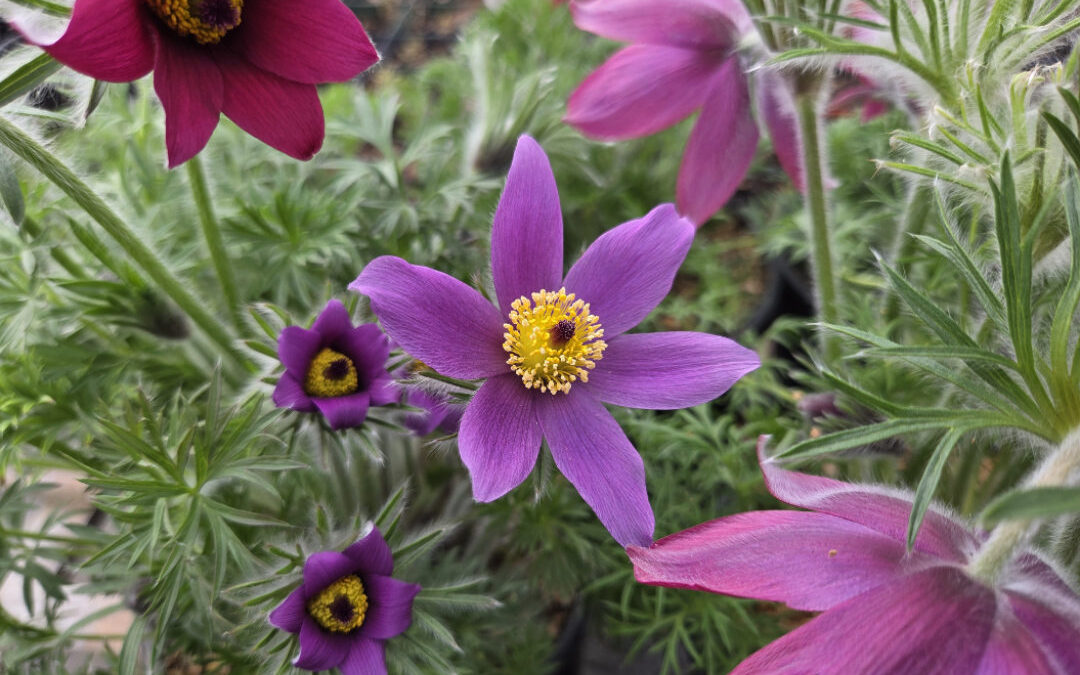
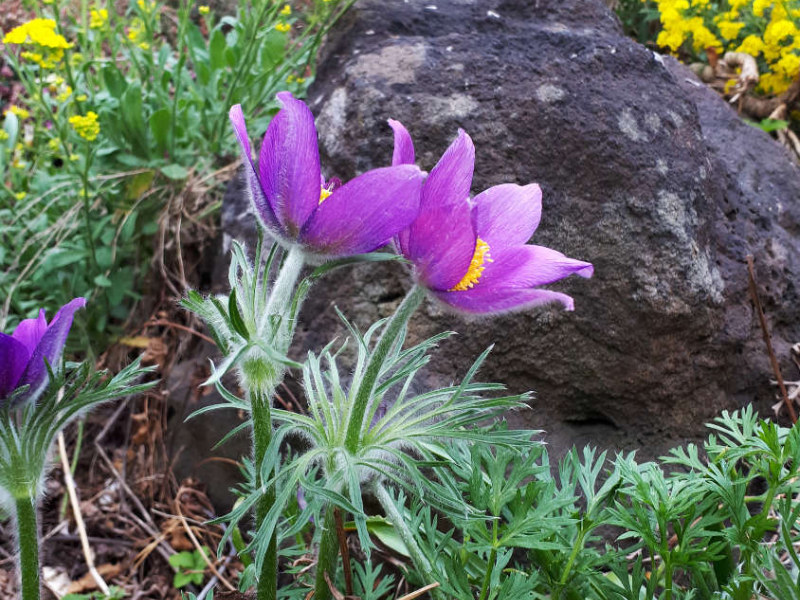
Pulsatilla vulgaris, the European Pasque flower
Few spring-blooming perennials combine delicate beauty with rugged resilience quite like Pulsatilla vulgaris, the European Pasque flower.
Named for its bloom time around Easter (Pâques in French), this silky-petalled gem is equally at home in a rock garden or a sun-baked hillside and is virtually maintenance-free.
Pasque flower is cold-hardy in zones 4-8, making it an excellent choice for even the higher elevations in our Okanagan valley.
Native to the dry chalk grasslands and limestone meadows of central and northern Europe, Pulsatilla vulgaris has evolved over millennia in some of the continent’s most unforgiving soils.
Poor, thin, and freely draining ground is exactly what it prefers. Plant it in rich, moisture-retentive soil, and it will quietly sulk or simply disappear.
Give it the lean, gritty conditions it knows, and Pulsatilla vulgaris will reward you with decades of enjoyment.
How does Pulsatilla vulgaris resist drought?
The Pasque flower’s drought resilience is structural, not incidental. Its deeply tapering taproot drives far down into rocky substrate, accessing moisture reserves long after the surface soil has dried.
The finely divided, feathery foliage is covered in soft silver hairs, a classic xerophytic adaptation that reflects intense sunlight and reduces water loss through the leaf surface.
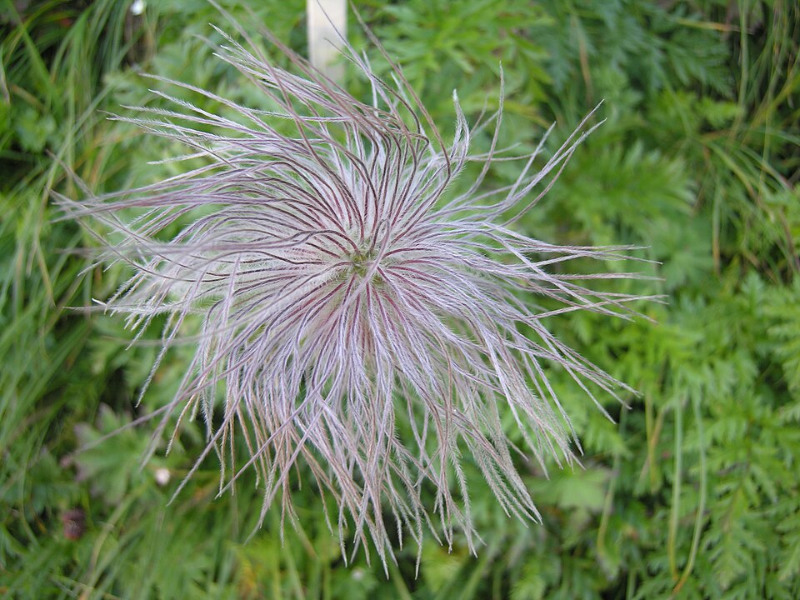
Even the ornamental silky-tailed seed heads that follow the blooms serve a purpose by allowing the plant to complete its reproduction cycle quickly, before summer heat fully arrives.
Growing tips–
Once established, which typically takes a full growing season, Pulsatilla vulgaris requires essentially no supplemental irrigation in climates such as the Okanagan with its modest spring rainfall.
It is highly suited to xeriscaping plantings, gravel gardens, and low-maintenance perennial borders where water conservation is a priority.
Pulsatilla vulgaris prefers to be sited in a full-sun location with excellent drainage, but will tolerate part-sun.
Avoid transplanting Pulsatilla once established, as the taproot, which makes this such a successful xeric plant, resents disturbance.
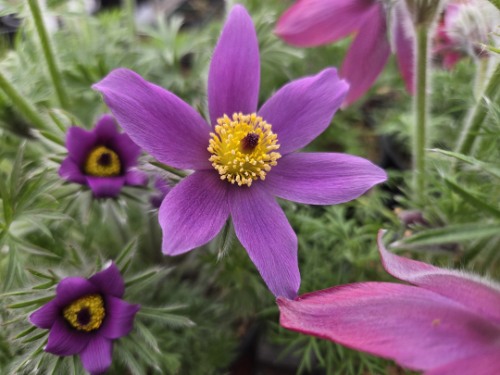
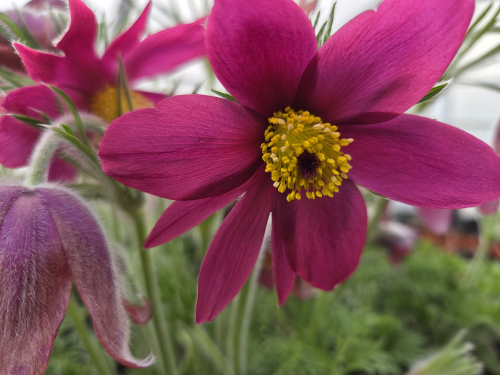
Cultivars of this perennial range from the classic violet-purple through white, red, and soft pink.
Pasque flower is one of the earliest blooming spring perennials and, as such, offers vital support for pollinators emerging from the long winter.
Our Plant Database features more than 500 plants tested and ideally suited for the unique challenges of gardening in the Okanagan’s extreme climate, including the plants in this article.