
GARDENING WITH NATURE
Article by Sigrie KendrickNot all plants like the Okanagan
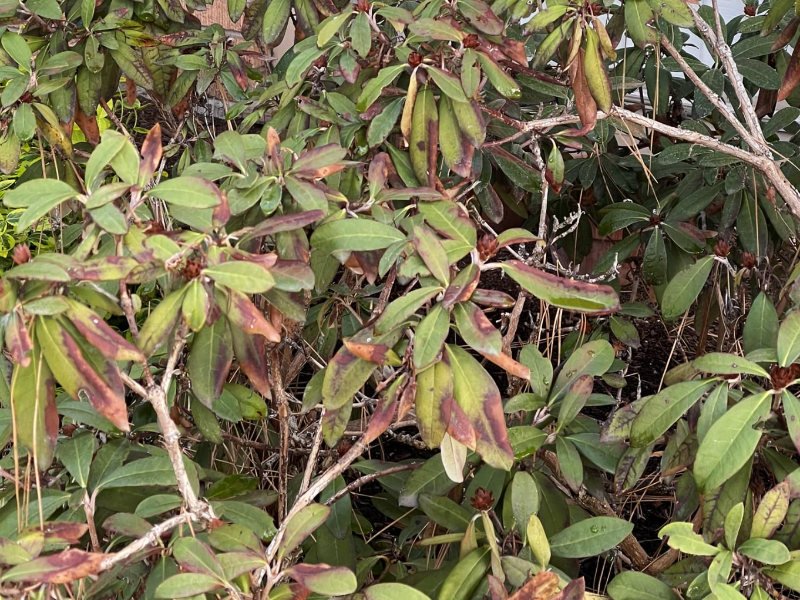
“Everything in its place” is a saying that ought to be applied when determining which plants you put into your landscape — especially when it comes to Okanagan gardening. A client of mine was recently bemoaning the fact that no matter what she did, her inherited rhododendron looked terrible, and I couldn’t disagree. Our Okanagan climate can be challenging for plants. In the last couple of years, we’ve seen winter lows approaching –40°C and summer highs exceeding 40°C. That’s almost an 80-degree temperature difference. Vancouver and other coastal climates see a fraction of that change in temperature over the course of a year. The Okanagan Valley’s stunning landscapes and thriving agriculture might suggest it’s a gardener’s paradise, but experienced local horticulturists know better. While this semi-arid region excels at growing certain plants, it presents significant challenges for some of North America’s most beloved ornamental shrubs and trees.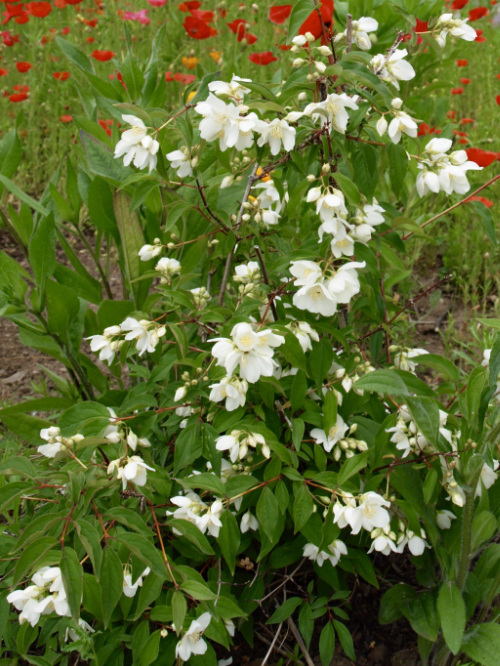
Popular Garden Plants That Struggle Here
Rhododendrons, azaleas, hydrangeas, and most Japanese maples (Acer species) may dominate garden centres but they’re fighting an uphill battle against this valley’s unique environmental conditions.
The most fundamental obstacle these plants face in the Okanagan is soil chemistry.
Rhododendrons, azaleas, and most hydrangeas are acid-loving plants that thrive in soils with a pH between 4.5 and 6.0. Unfortunately, Okanagan soils typically range from neutral to alkaline, often sitting between 7.0 and 8.5 pH. This alkaline environment creates a cascade of problems for acid-preferring plants.
In alkaline soils, essential nutrients become chemically bound and unavailable to plant roots, particularly iron, manganese, and zinc.
The result is chlorosis – that telltale yellowing of leaves while veins remain green – which weakens plants and makes them susceptible to other stresses.
While gardeners can attempt to acidify soil with sulphur or aluminum sulphate, maintaining the necessary pH in naturally alkaline conditions requires constant intervention and expense.
Dry Summers and Low Humidity
The Okanagan’s semi-arid climate presents another insurmountable challenge.
With annual precipitation ranging from just 250-400 mm in many areas, the region experiences genuine water scarcity.
Rhododendrons and azaleas evolved in moist, humid environments where their shallow, fibrous root systems could rely on consistent moisture and lots of organic matter. Their large, thin leaves are designed for environments with high humidity and reliable rainfall—not this valley’s dry summers and low humidity.
Hydrangeas also struggle with the Okanagan’s drought conditions. These plants require consistent soil moisture and suffer significantly when subjected to water stress, which is virtually inevitable during the valley’s hot, dry summers.
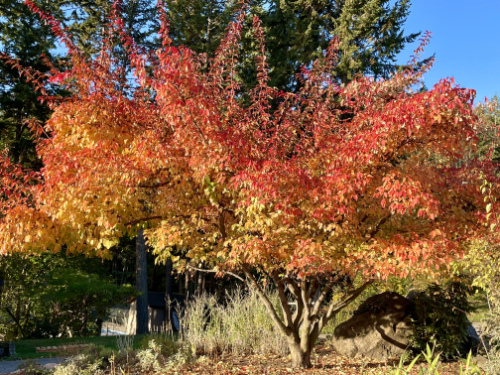
Most Japanese maples face similar challenges. These delicate trees prefer consistent moisture and protection from harsh afternoon sun and drying winds – conditions opposite to what the Okanagan typically provides.
Temperature Extremes and Wind Exposure
While the Okanagan enjoys warm summers perfect for viticulture, it also experiences significant temperature fluctuations and harsh winter conditions that stress some of these ornamental plants.
Many rhododendron and azalea varieties that appear hardy on paper struggle with this region’s combination of cold winters followed by rapid spring warm-ups, which can trigger premature budding. That can then be followed by frost damage to those tender new buds.
The valley’s frequent winds compound these problems. Strong, dry winds increase water loss from plant tissues and can physically damage the brittle branches of Japanese maples.
Rhododendrons and azaleas, with their broad evergreen leaves often lose moisture faster than their root systems can replace it.
Why Microclimates Rarely Solve the Problem
Some gardeners attempt to create microclimates to accommodate these plants: installing irrigation systems, adding shade cloth, and amending soil annually.
While occasionally successful in the short term, these solutions often prove unsustainable.
The constant inputs of water, acidifying agents, and organic matter required to maintain suitable conditions are both expensive and environmentally questionable in a water-scarce region. Moreover, even with careful microclimate management, these plants rarely achieve the robust growth and spectacular displays they’re known for in more suitable climates.
The result is often a disappointing performance that doesn’t justify the ongoing investment.
Choosing Plants That Belong Here
Rather than fighting against the Okanagan’s natural conditions, successful valley gardeners embrace plants that thrive in alkaline soils and dry conditions.
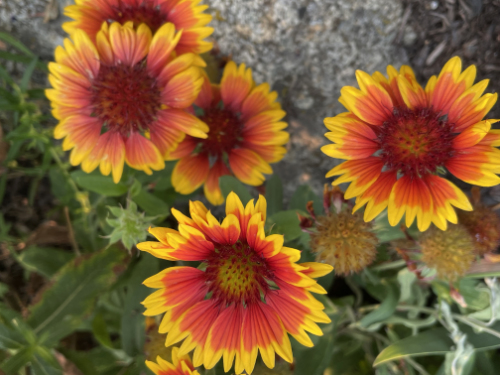
Native and adapted plants like penstemon, lavender, yarrow, ornamental grasses, and xeric trees and shrubs provide beauty without the constant struggle.
The Okanagan’s unique climate offers opportunities to grow plants that would struggle elsewhere – Mediterranean herbs, drought-adapted perennials, and heat-loving annuals that coastal gardeners envy.
By choosing plants suited to local conditions, gardeners can create stunning landscapes that celebrate the region’s natural character while conserving precious water resources.
The key to successful Okanagan gardening isn’t forcing unsuitable plants to survive, but discovering the remarkable beauty of plants that naturally call this unique valley home.
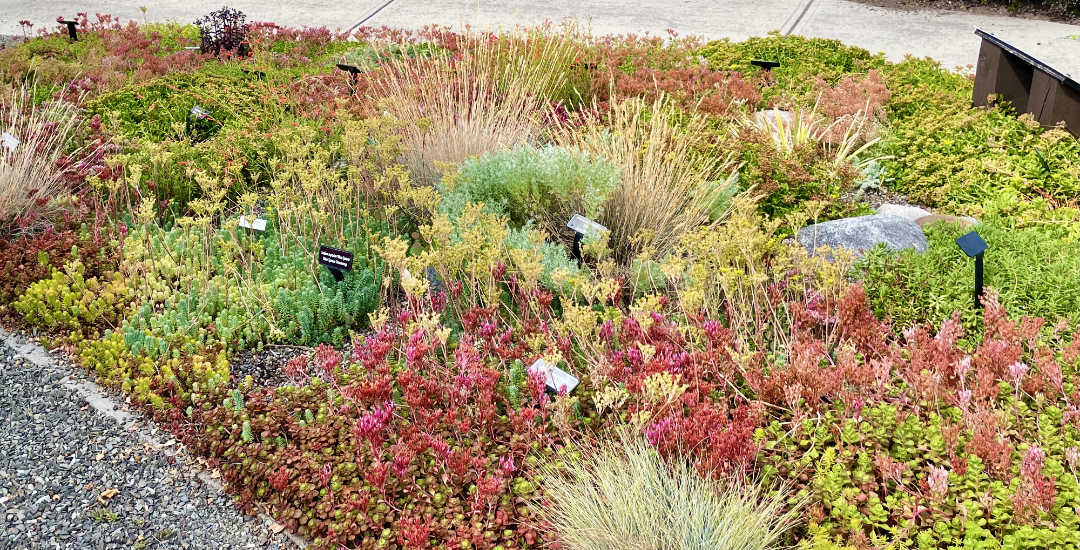
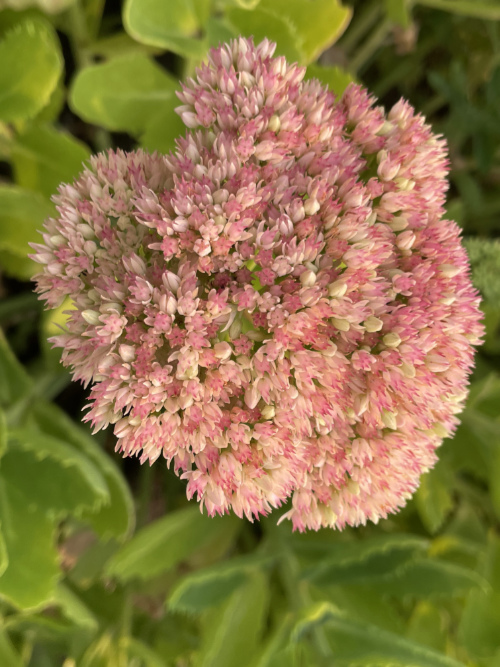
A variety of sedums and ornamental grasses instead of coastal perennials
The relationship between plants, pests, and beneficial insects represents a natural system of checks and balances. By supporting these natural predators, we align ourselves with ecological processes refined over millions of years.
Rather than fighting against nature with chemicals and barriers, we can harness these allies to create gardens that not only produce beautiful plants but also support diverse wildlife communities.
The next time you spot a lacewing, soldier beetle, or even a spider in your garden,
consider yourself lucky to be witnessing nature’s pest control experts at work.