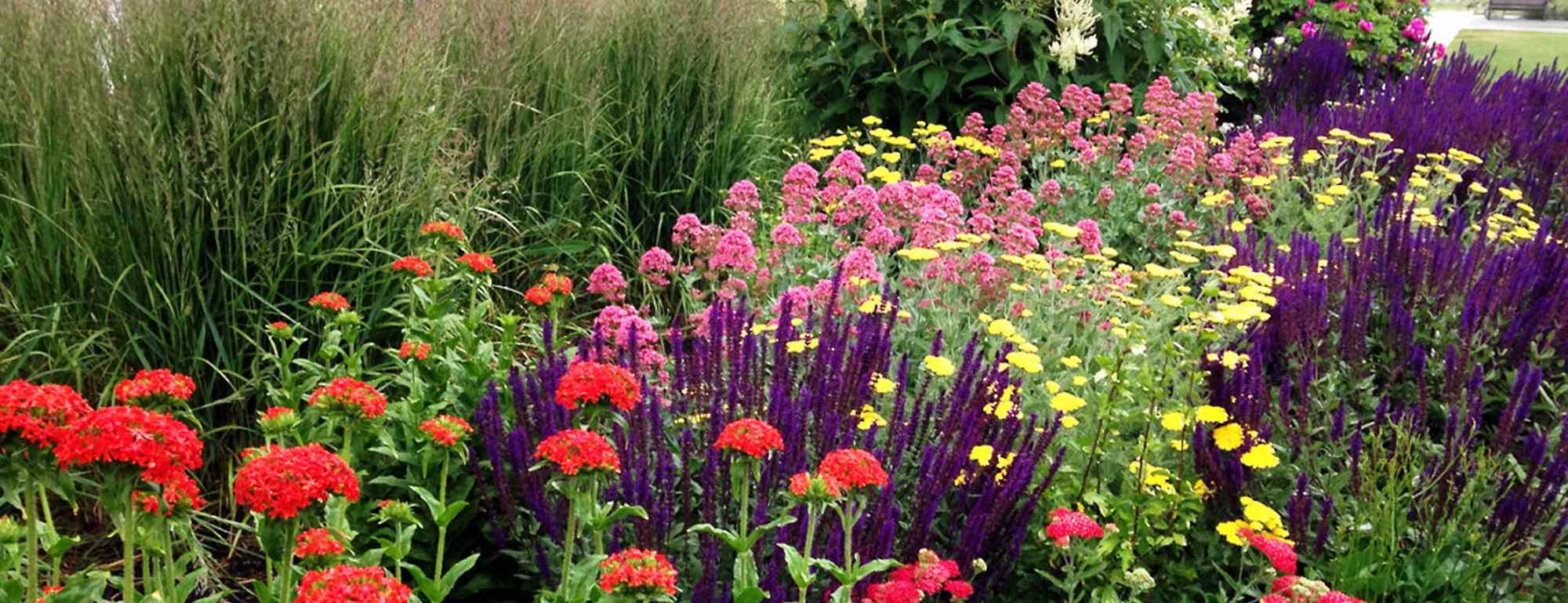
Okanagan Drought: Your Garden Is Part of the Solution
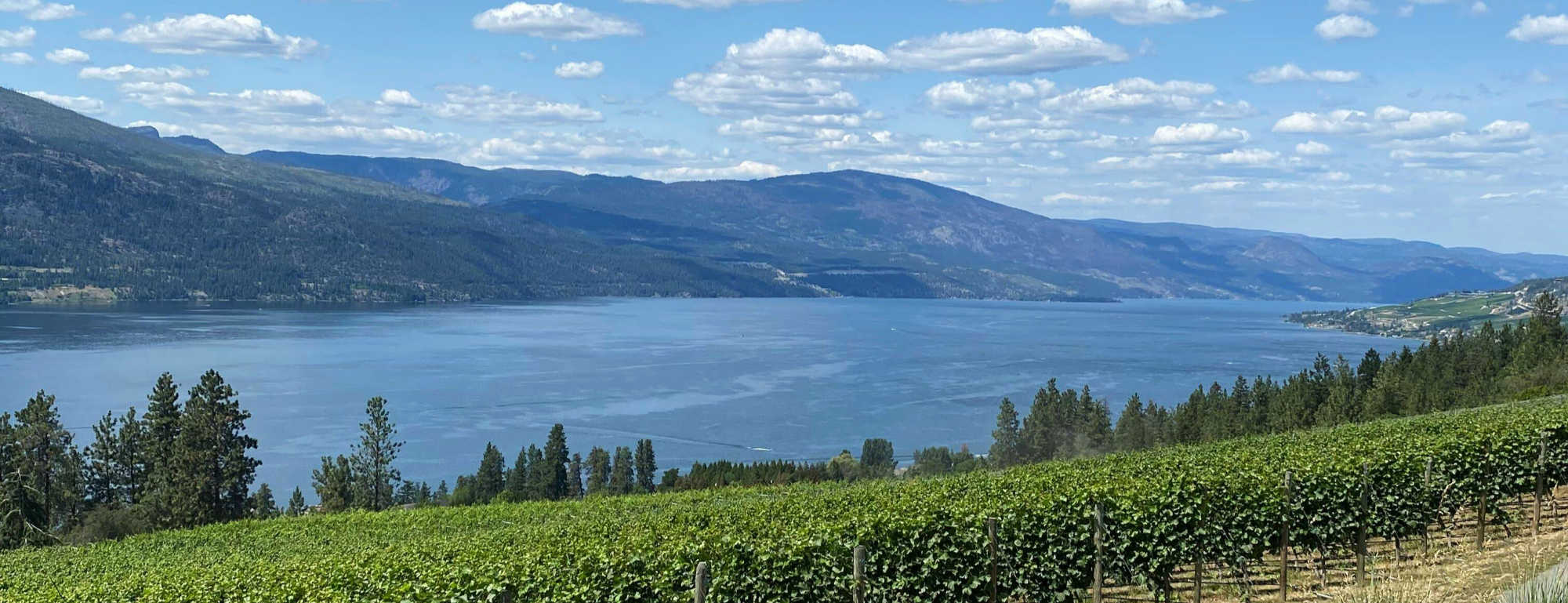
We live on a lake.
We are in a drought.
Both things are true.
Understanding WHY matters more than ever for our valley’s future.
1. THE ISSUE
The Myth of Abundance
Okanagan Lake is impossible to ignore. It stretches for 135 kilometres and commands the landscape through every season. So it’s completely understandable that most people assume we have more water than we’ll ever need. That assumption is wrong, and it’s one of the most important misconceptions in our valley.
The Okanagan is a semi-arid region– in fact, one of the driest in Canada. Our water doesn’t come from the lake itself; the lake is simply where it’s stored. What actually fills it is snowpack and spring runoff. And both are shrinking.
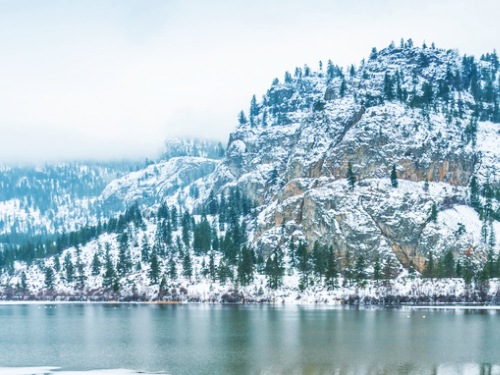
THE SNOWPACK PROBLEM
Okanagan Lake refills by only 1.5 metres in an average year, entirely from snowmelt and spring rain. The lake is actively managed to never hold more than that inflow to prevent flooding. In a dry year, it may not even reach that 1.5 metre mark.
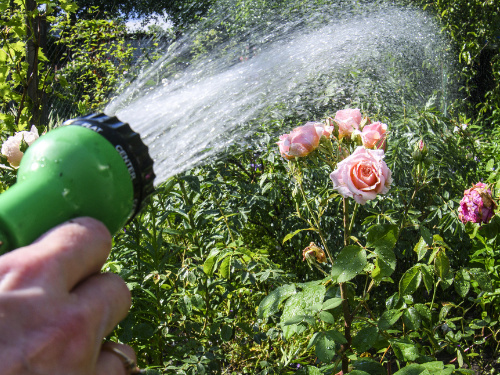
LESS WATER PER PERSON THAN ANYWHERE IN CANADA
Despite our lakes, the Okanagan has less water available per person than any other region in Canada, while at the same time being one of the highest per-person water users in the country.
Source: Statistics Canada
YOUR GARDEN IS PART OF THE EQUATION
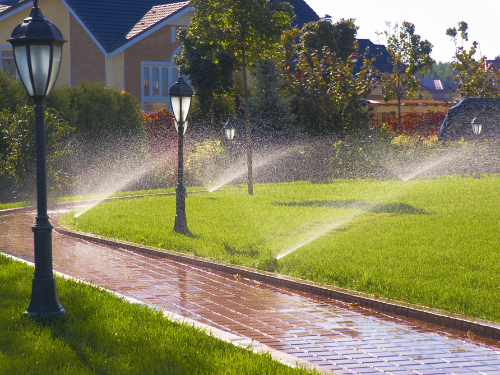
The second largest use of water in the Okanagan is household lawns and gardens. What we plant and how we water is one of the most direct levers residents have on our collective water supply.
Source: Okanagan Basin Water Board
2. THE NUMBERS
Water in the Okanagan: A Drought Reality
We often think of drought as something that happens elsewhere– in dusty, brown landscapes very different from our valley. But drought is defined by the gap between water supply and water demand, not by how things look. And by that measure, we’ve been in a drought cycle for years.
675L
Average daily water use per Okanagan resident vs. the Canadian average of 329L. We use roughly double.
makewaterwork.ca
#2
Household lawns & gardens are the second largest water use in the Okanagan Valley.
Okanagan Basin Water Board
28 cm
Annual average precipitation in the Okanagan.Less than many deserts.
makewaterwork.ca
Level 3–4
Extreme drought conditions across the Okanagan from mid-summer through fall 2025, following record-low spring snowpack.
Province of BC
About that lake…
1.5 m
That’s how much Okanagan Lake refills in an average year
Okanagan Lake is managed to never hold more than 1.5 metres of seasonal inflow in order to protect the valley from flooding. In a dry year, even that modest refill doesn’t happen. The lake may look full, but what you’re seeing is carefully managed storage, not abundance.
“Canada’s changing climate means more droughts, floods and storms—
along with less ability to predict them.”
Robert Sandford, EPCOR Chair for Water and Climate Security,
United Nations University Institute for Water, Environment and Health
Building Climate Resilience
Heat changes everything.
Longer, hotter summers place new stresses on plants, soils, and even our neighbourhoods. Discover practical ways to build a garden that can cope with increasing heat while using water wisely.
→ Explore our companion guide– Okanagan Heat: Helping Your Garden Thrive
3. THE FUTURE
It’s Going to Get Harder
Climate scientists use decades of data to identify patterns, and the pattern for the Okanagan is clear.
Our valley is warming faster than the Canadian average.
The shifts already underway will accelerate.
The amount of water available in the Okanagan has always been snowpack-dependent. Warmer winters mean more precipitation falling as rain (which runs off quickly) rather than snow (which stores slowly and releases through summer, when we need it most).
- Severe weather events occurring more frequently
- Less snow and more rain in winter — reducing our natural water storage
- Snow melting earlier, leaving reservoirs low by peak summer demand
- Longer stretches of hot temperatures with no precipitation
- Less water available in the hottest months — when farms, firefighters, and fish need it most
- More frequent flooding and drought occurring in the same year, sometimes weeks apart
- Greater dependence on water storage infrastructure that was built for different conditions
Source: Building Climate Resilience in the Okanagan, Regional District of Okanagan-Similkameen and Make Water Work
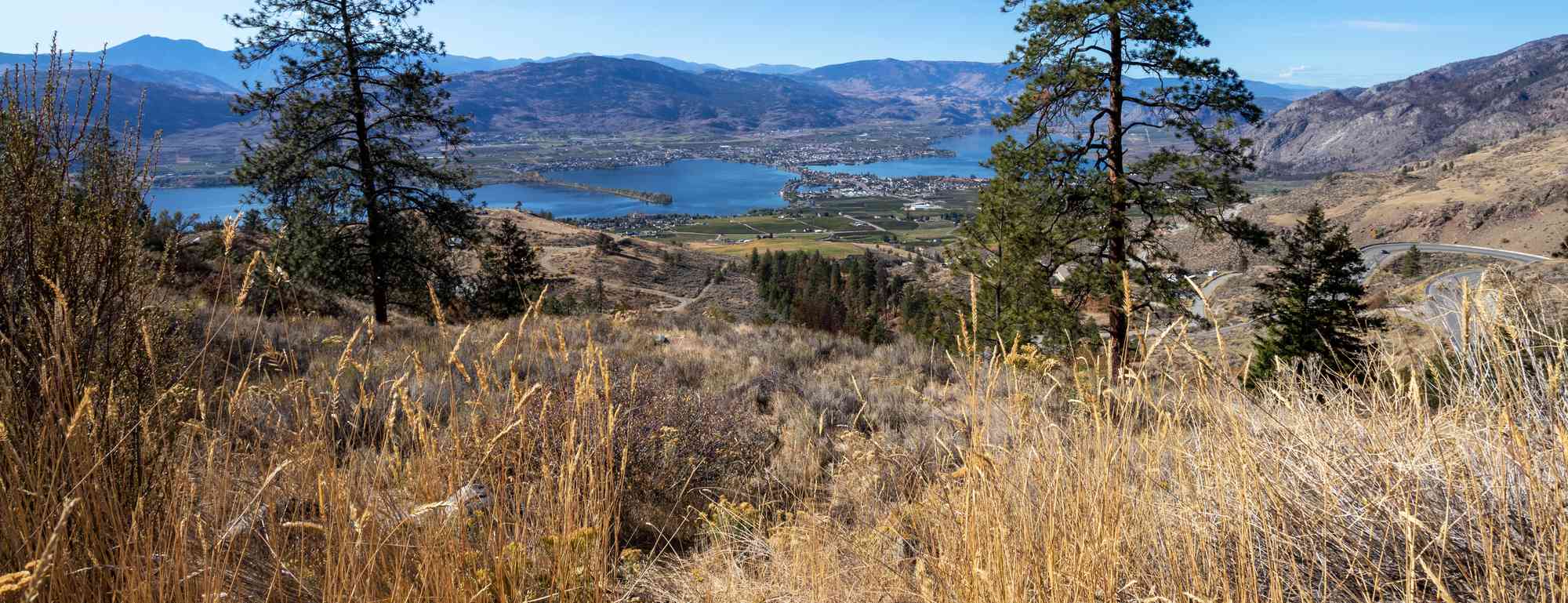
Spring is the season of greatest flood risk. Summer and fall are the seasons of greatest drought risk.
In a changing climate, both extremes are becoming more intense, and the window between them is narrowing. Extended drought is now considered the likely permanent baseline for Okanagan summers.
4. THE SOLUTION
Xeriscape: Beautiful Gardens That Work with Our Climate
Xeriscape gardening isn’t about sacrificing beauty for responsibility. It’s about choosing plants and practices that belong here– that suit our semi-arid landscape rather than fighting it. When we garden with our climate, we use dramatically less water, and our gardens are often more vibrant, more resilient, and better for local wildlife.
A quick note on terminology: xeriscape is sometimes mispronounced as “zeroscape,” conjuring images of bare gravel and a single cactus. That’s not xeriscape. True xeriscape gardening produces lush, biodiverse, pollinator-rich landscapes using the seven core principles below.
“Using the Seven Principles of Xeriscape Landscaping is the easiest, most cost-effective way to have a vibrant, successful garden.”
Gwen Steele, gardener and co-founder of the Okanagan Xeriscape Association
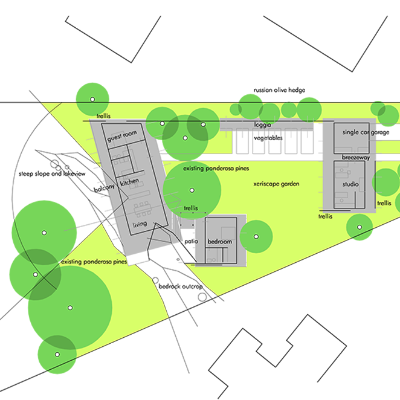
1. PLAN & DESIGN
Start with a thoughtful layout that considers sun, shade, soil, and drainage so every plant thrives where it’s planted.
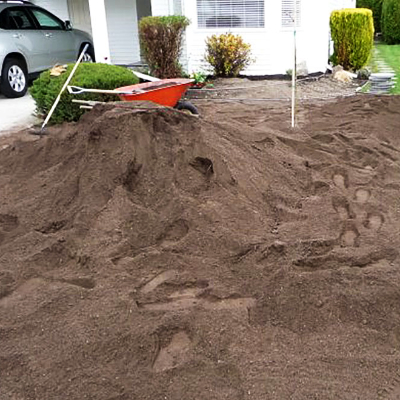
2. IMPROVE YOUR SOIL
Healthy soil retains moisture better. Add compost to improve structure and reduce how often you need to water.
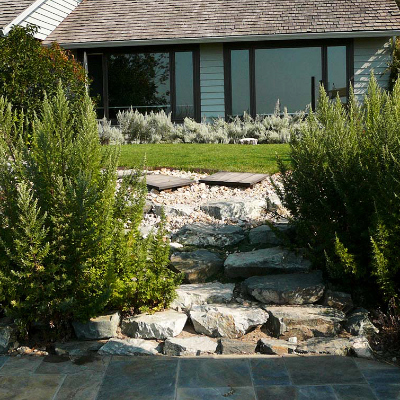
3. PRACTICAL TURF AREAS
Reduce lawn to areas where you’ll actually use it. Replace the rest with drought-tolerant groundcovers and plantings.
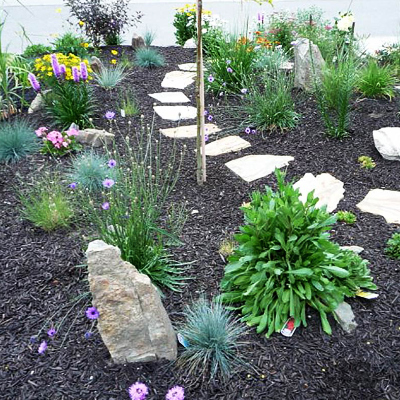
4. MULCH, MULCH, MULCH
A fresh layer of organic mulch every year insulates roots, dramatically slows evaporation, and feeds the soil as it breaks down.
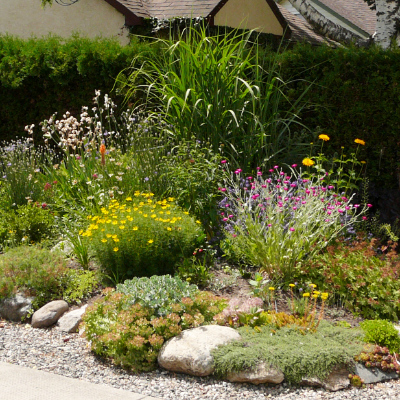
5. CHOOSE XERIC PLANTS
Select native and low-water plants suited to our dry climate. The Okanagan’s semi-arid conditions are actually ideal for a huge variety of beautiful species.
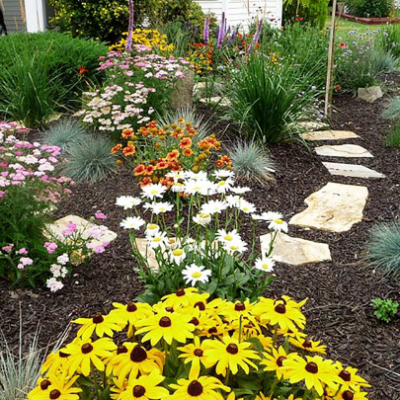
6. MAINTAIN WISELY
Mow high (5–8cm), leave clippings, aerate in fall, and let leaves stay in garden beds. Each habit reduces the water your yard needs.
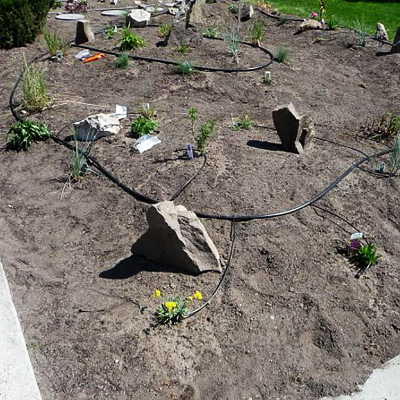
7. EFFICIENT IRRIGATION
Water between dusk and dawn to prevent evaporation. Use drip irrigation for gardens– 90% of water reaches the plant, vs. 50–70% with sprinklers.
Eva Antonijevic, biologist and gardener
PRACTICAL TIPS TO START TODAY
Water at night
Water between 10 p.m. and 6 a.m. to prevent evaporation. Check local restrictions — they vary by utility.
Embrace drip irrigation
Drip delivers water directly to roots at low pressure, and is far more efficient than any sprinkler system.
Don’t rake in Fall
Fallen leaves act as a natural mulch, feeding the soil and preventing moisture loss through winter.
Collect rainwater
Rain barrels harvest naturally soft, chemical-free water– perfect for gardens and container plants.
Mow high
Leaving grass 5–8cm tall shades the soil, slows evaporation, and keeps lawns healthier with less water.
Use gravel wisely
Bare rock and gravel yards actually increase local temperatures and reduce water retention. Choose plants instead.
TAKE ACTION
Your Garden Is Part of the Solution
The Okanagan Xeriscape Association gratefully acknowledges the Central Okanagan Foundation for its generous grant funding, which made the research, development, and creation of this community drought resource possible. We are proud to partner with organizations dedicated to strengthening environmental resilience across the Okanagan Valley.