
CLIMATE-RESILIENT PLANTS
Article by Josh Smith, Xeriscape Endemic Nursery (XEN)
Biologist Josh Smith is general manager of XEN Nursery in West Kelowna, which grows and propagates native and xeriscape plants for both ecological restoration projects and landscaping use throughout the Okanagan. He is also vice-president of the Okanagan Xeriscape Association.
Plants have evolved a range of ways to survive under a blazing summer sun.
Adaptability and climate-resilience are essential for plants native to the Okanagan Valley’s arid climate, with its hot summers and low rainfall. Increasingly, these same strategies are becoming important across British Columbia, as drought and extreme heat events intensify with climate change.
ESCAPING DROUGHT
One of the most effective tactics is simply to hide from harsh conditions altogether.
Many xeric (Latin: ‘dry’) plants “escape” drought by completing their life cycle during the moist spring months. They bloom early, set seed quickly, and then die back above ground before the heat and dryness of summer arrive.
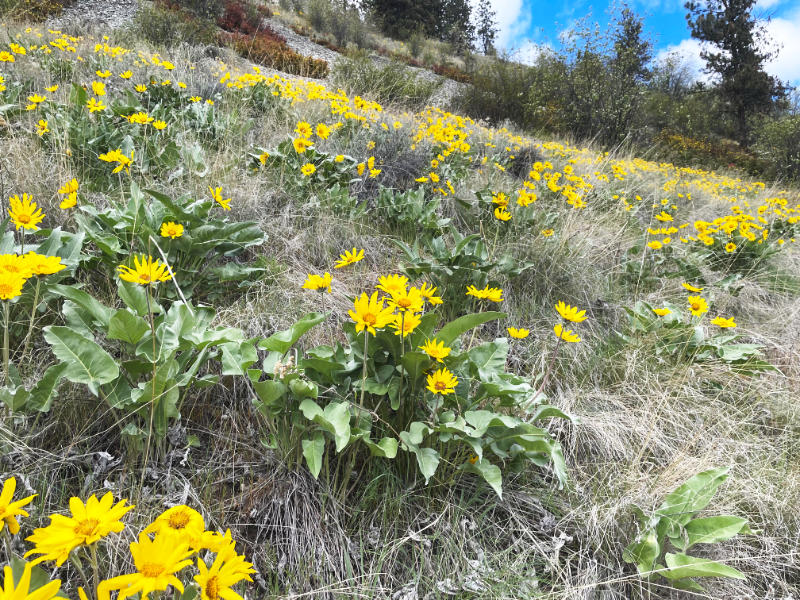
A familiar example is Arrowleaf Balsamroot (Balsamorhiza sagittata), Kelowna’s official flower. These bright yellow blooms cover Okanagan hillsides each spring, taking advantage of abundant moisture. As summer heat intensifies, their large arrow-shaped leaves wither and dry. However, the plant persists underground, storing energy and moisture in a deep taproot, ready to sprout again with snowmelt and spring rains.
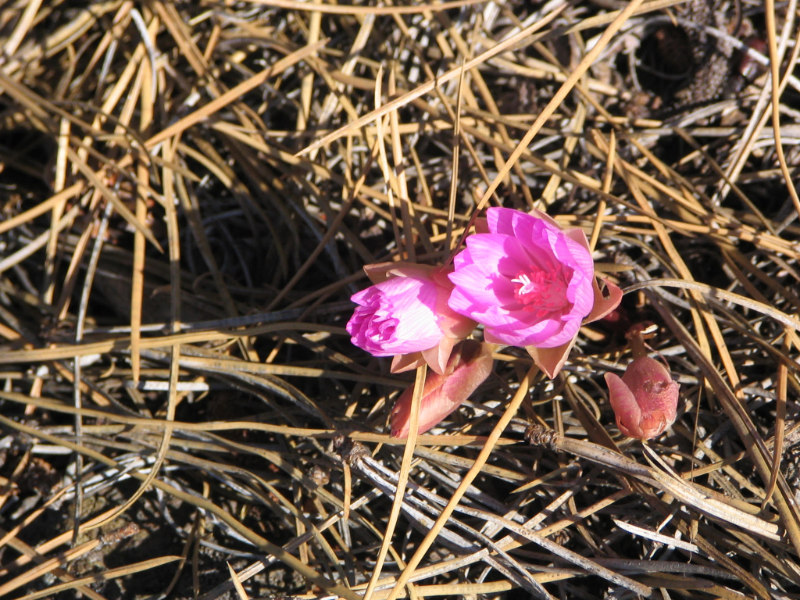
An even more dramatic example is Bitterroot (Lewisia rediviva). Growing in dry, rocky soils, bitterroot emerges early in spring to produce delicate pink flowers, often before its leaves are fully visible. Soon after blooming, the entire plant disappears from the surface, surviving the summer drought as a fleshy underground root until favourable conditions return. The Latin ‘rediviva’ means ‘revived’ and refers to this ability.
Spring bulbs follow a similar pattern. Emerging from bulbs or corms, they grow rapidly, bloom, set seed, and store energy underground before retreating as temperatures rise. During their brief time above ground, they complete their entire reproductive cycle and prepare for the following year.
Although it is much more common for plants in Mediterranean climates, some drought escapers don’t go completely dormant until next spring but simply allow leaves to dry up and yellow during the summer, then green up rapidly once the fall rains start. In the Okanagan, this strategy is used by all of our native grasses, which is why our hillsides are yellow in the summer yet green in the spring and fall.
AVOIDING DROUGHT
Some plants are able to avoid drought stress through strategies focused on maintaining a high water content inside the plant. This falls into two major categories: (i) ‘Water Savers’ prioritize minimizing water loss from the leaves, and (ii) ‘Water Spenders’ focus on maximizing water uptake from the soil.
An easily spotted water saver strategy is silvery, powdery, or fuzzy foliage. This reduces water loss by reflecting more sunlight, which lowers leaf temperature and reduces transpiration. Common Rabbit-Brush (Ericameria nauseosa), Pearly Everlasting (Anaphalis margaritacea), and Golden-Aster (Heterotheca villosa) are native Okanagan examples of silvery, powdery, or fuzzy foliage, respectively. Garden favourites like Lavender or Silver Mound also use this strategy. Though less easily identified, another water saver strategy is to reduce the quantity or diameter of the pores on the underside of leaves (stomata) to reduce water loss when the leaves exchange air with the environment.
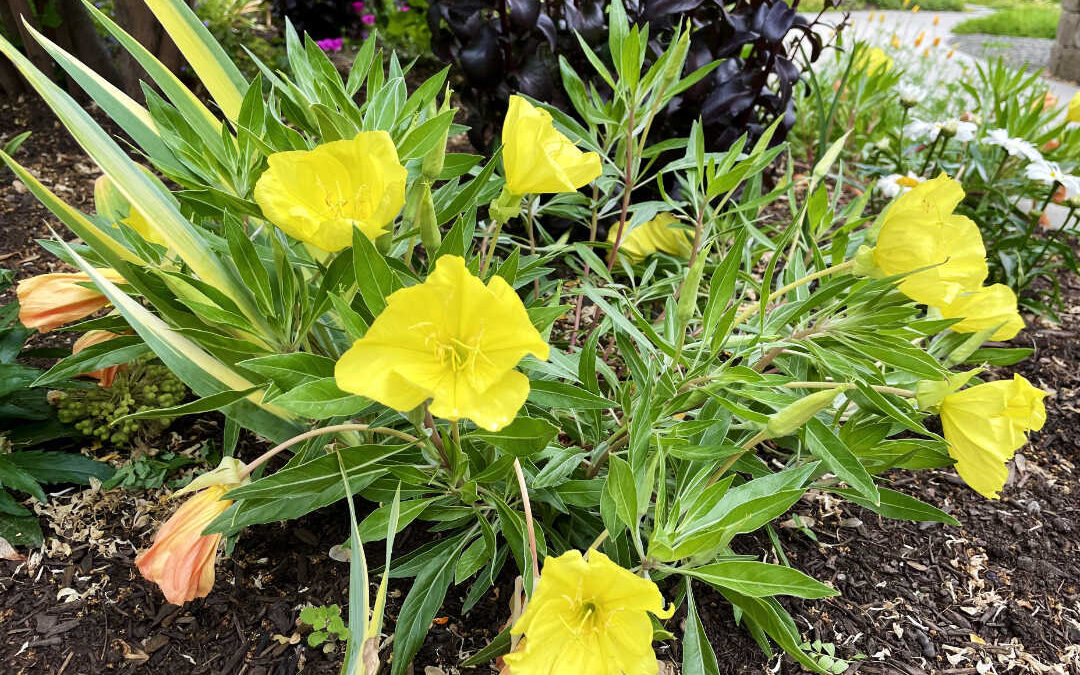
Water spenders take a completely opposite approach and focus on getting as much water as possible out of the soil. Many Okanagan native plants produce deep and/or dense root systems to reach moisture far below the dry surface soils. Balsamroot, Common Yarrow (Achillea millefolium), and Brown-Eyed Susan (Gaillardia aristata) all produce a deep taproot and, for an extreme example, Giant Wildrye (Leymus cinereus) produces a dense fibrous root system that has been found as deep as 2.4m (8’) below ground. Garden favourites such as Missouri Evening Primrose also demonstrate this strategy well. Another water spender strategy, which is too complex to explain in this brief article, is to increase hydraulic conductance. Essentially, picture all plant roots as straws sipping at the water in the soil. Through a multitude of different mechanisms, some plants can suck harder or more efficiently on the straw than their neighbours. Saskatoon (Amelanchier alnifolia) and Antelope-Brush (Purshia tridentata) are great examples of native species with a high hydraulic conductance.
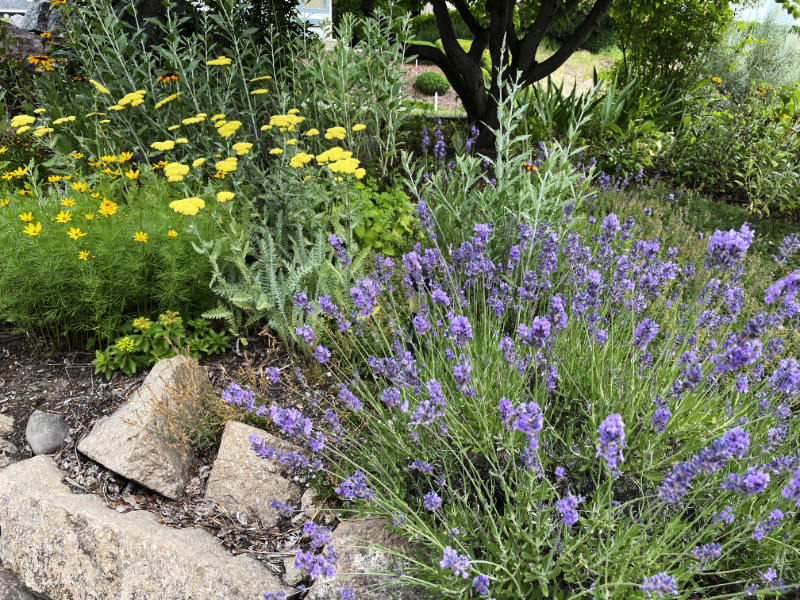
Lavender and Yarrow (Photo by Judie Steeves)
TOLERATING DROUGHT
Finally, some plants are adapted to tolerate drought conditions directly, even when water is scarce. These adaptations can be structural, physiological, or biochemical.
Many xeric plants have narrow or finely divided leaves, reducing surface area to limit water loss and heat absorption. Desert Yellow Fleabane (Erigeron linearis) and Prairie Smoke (Geum triflorum) are examples of native species that use this strategy, and the garden favourite Pine-Needle Penstemon is another classic example. Other plants, like Snowbrush (Ceanothus velutinus), produce a thick, waxy leaf coating (cuticle) that acts as sunscreen to block some UV light from entering the leaf.
Some plants make use of accessory pigments to absorb sunlight. Chlorophyll, which is what makes plants appear green, is the most efficient pigment for absorbing sunlight, but in low-water conditions, it produces harmful compounds that can damage or kill leaves, so some plants make use of accessory pigments to shield the chlorophyll from sunlight. These pigments give off red, orange, or blue light more than green, which is why some of our drought-tolerant plants, like Oregon Grape (Berberis aquifolium), are these colours.
Another easily noticeable drought-tolerance adaptation is aromatic plants. They produce essential oils, also called volatile organic compounds (VOCs), that are often stored in glands on the leaf surface where they function to absorb and scatter excess light and form a water repelling layer to slow the diffusion of water vapour out of the leaf. VOCs also evaporate easily when heated and provide evaporative cooling, similar to sweating in animals. For native species, Big Sagebrush (Artemisia tridentata) is the most aromatic example, but many ornamental favourites also use this strategy, like Russian Sage, Lavender, Thyme, and Common Sage.
Succulents, like cacti, sedums, and sempervivums, are stereotypically thought of as some of the most drought-tolerant plants. Their almost unique adaptation is a specialized photosynthesis pathway that enables them to open their leaf pores only at night when it is cool, absorb and store carbon dioxide, and then during the day they can close their leaf pores to reduce transpiration loss and still perform photosynthesis using the stored CO2. This adaptation is highly water-efficient and is what allows succulents to have watery, fleshy leaves even in the middle of a desert.
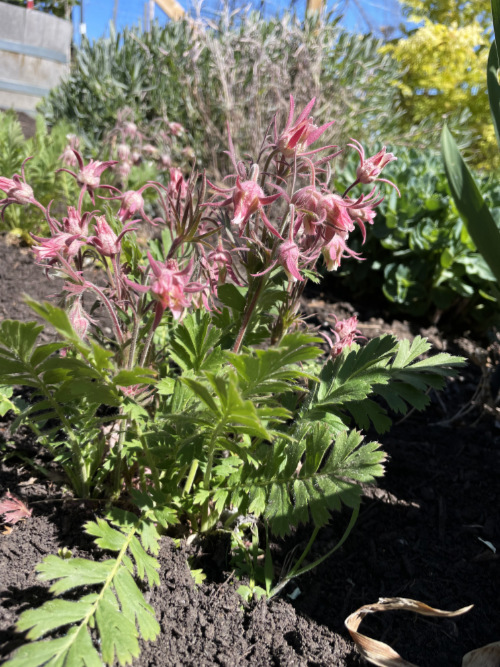
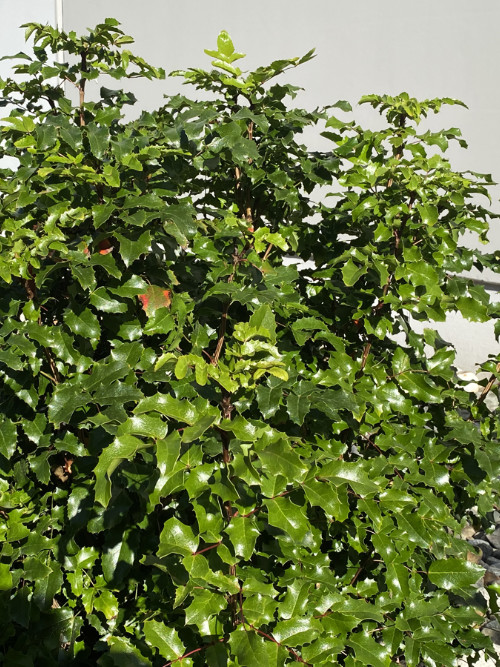
Oregon Grape, Berberis aquifolium
Working with nature in the Okanagan
In reality, many plants use a combination of these strategies rather than relying on just one. This flexibility is what allows them to thrive in the Okanagan’s challenging climate.
For gardeners and landscapers, understanding these natural adaptations offers a powerful lesson: by choosing plants that are already suited to our environment, we can create landscapes that are both beautiful and resilient– while using far less water. As drought conditions become more common, working with nature is no longer just a good idea– it’s essential.