
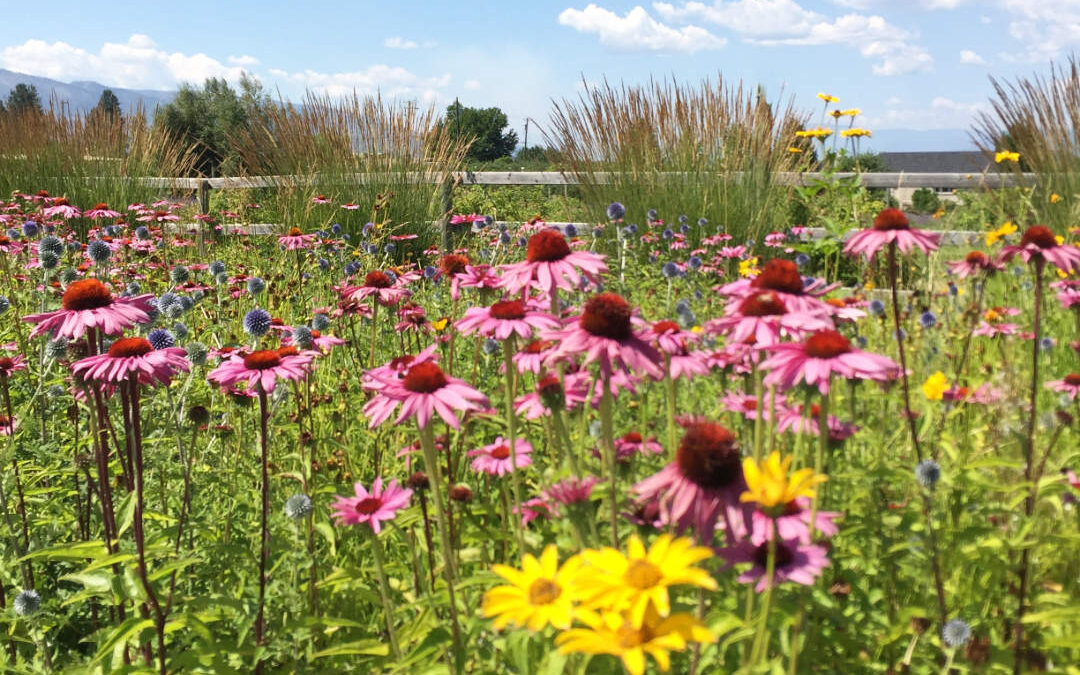
Have You Ever Watered a Plant… and It Still Wilted?
Have you ever watered a plant, found the soil still damp, yet watched the leaves wilt anyway?
That plant may not be thirsty—it may be suffering from heat stress.
As Okanagan summers become hotter and heat waves last longer, gardeners are discovering that watering alone isn’t always enough. A plant also needs to be able to tolerate prolonged periods of high temperatures.
Hardiness Zones vs. Heat Zones
Most gardeners are familiar with Plant Hardiness Zones, which tell us how well a plant can survive the coldest temperatures of winter.
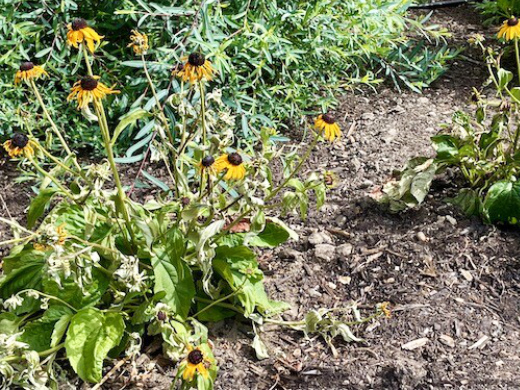
A lack of cold hardiness in plants generally results in dramatic winter kill. The effects of heat stress on a plant tend to be more subtle and occur at the cellular level, resulting in wilting, dieback and flower damage. The effects often mimic drought stress but with wet soil.Fewer people know about Heat Zones. Developed by the American Horticultural Society (AHS), Heat Zones measure something completely different: the average number of days each year when temperatures reach 30°C or higher.
While hardiness tells us whether a plant can survive winter, heat zones help us understand how well it can cope with prolonged summer heat.
Heat Stress Isn’t Always Drought Stress
One of the confusing things about heat stress is that it often looks just like drought stress. Plants may wilt, leaves may scorch, flowers may fade, or stems may die back—even when the soil still contains adequate moisture. That’s because extreme heat affects how plants function, making it difficult for them to keep up with water loss during prolonged hot weather.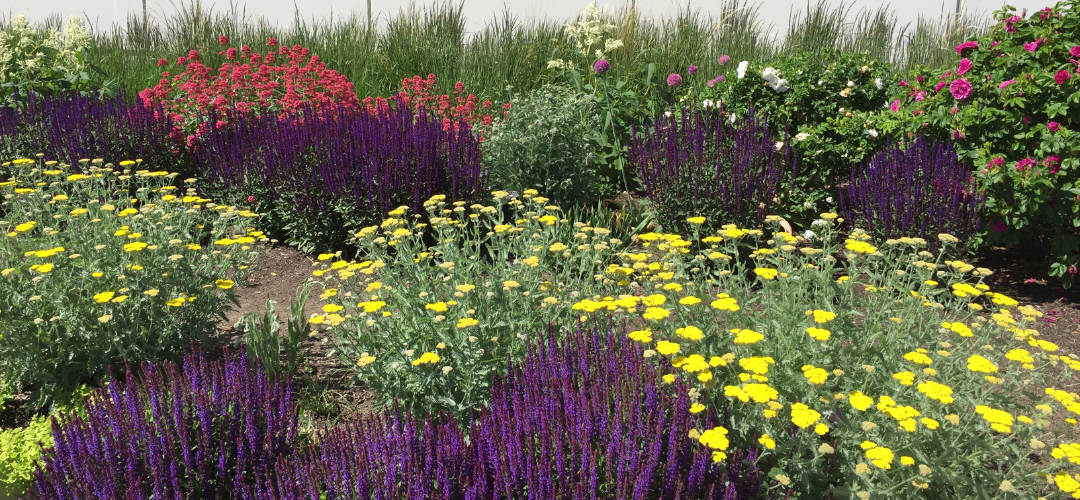
Plants chosen with heat tolerance in mind for the full sun setting in the UnH2O demonstration gardens
Why Heat Zones for Plants Matter in the Okanagan
Recent weather records show that Kelowna now experiences significantly more days above 30°C than it did just a few decades ago. Based on these observations, Kelowna has shifted from AHS Heat Zone 4 (14–30 days above 30°C each year) into Heat Zone 5 (30–45 days above 30°C). That doesn’t mean every plant will suddenly fail. It does mean that heat tolerance is becoming an increasingly important consideration when choosing plants for Okanagan gardens.How OXA Rates Heat Tolerance
Many plant growers rate their plants for heat tolerance using the American Horticultural Society (AHS) Heat Zone system. Rather than asking gardeners to interpret those numerical ratings, OXA has translated them into simple, easy-to-understand categories in our Plant Database: Poor, Fair, Good, and Excellent. These simplified ratings make it easier for Okanagan gardeners to compare plants and choose species better suited to today’s hotter summers. They are included in the Notes section for individual plants. Every plant in OXA’s Plant Database is rated to withstand at least AHS Heat Zone 6. Plants with a Poor heat-resistance rating may already struggle during our hottest summers, while those rated Fair, Good, or Excellent are generally better equipped to cope with prolonged heat.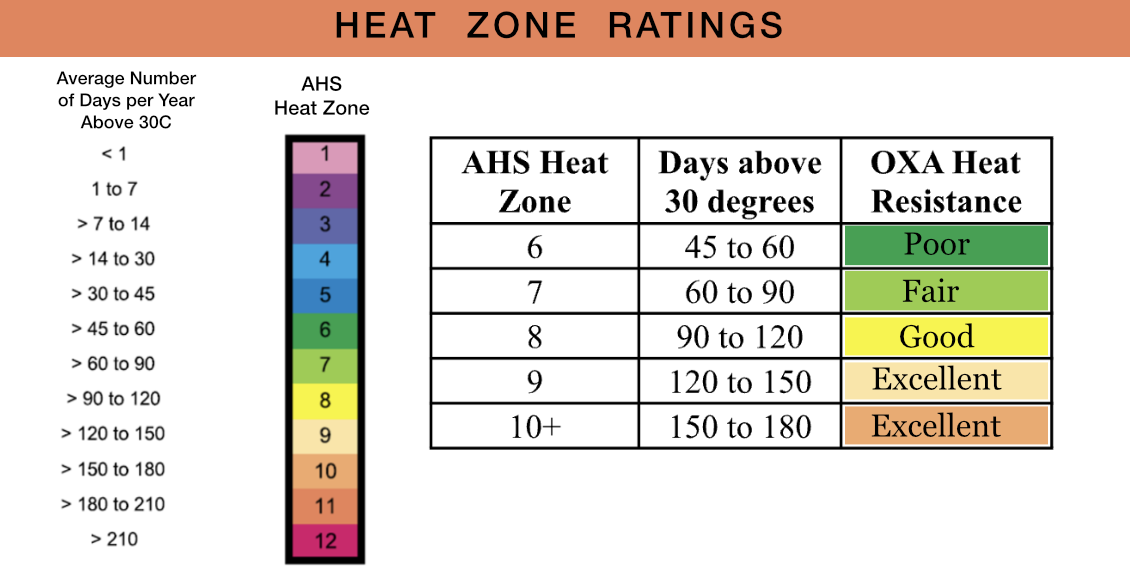
Learn More
Heat tolerance is just one of many factors to consider when selecting plants. Soil conditions, exposure, irrigation, and winter hardiness all play important roles as well.
Explore OXA’s Plant Database to compare heat resistance ratings, or return to our companion guide, Okanagan Heat: Helping Your Garden Thrive, to learn more about creating climate resilient landscapes for the future.