
PLANT OF THE MONTH- October
by Sigrie Kendrick
Caryopteris
Bluebeard, Blue Mist or Blue Spirea
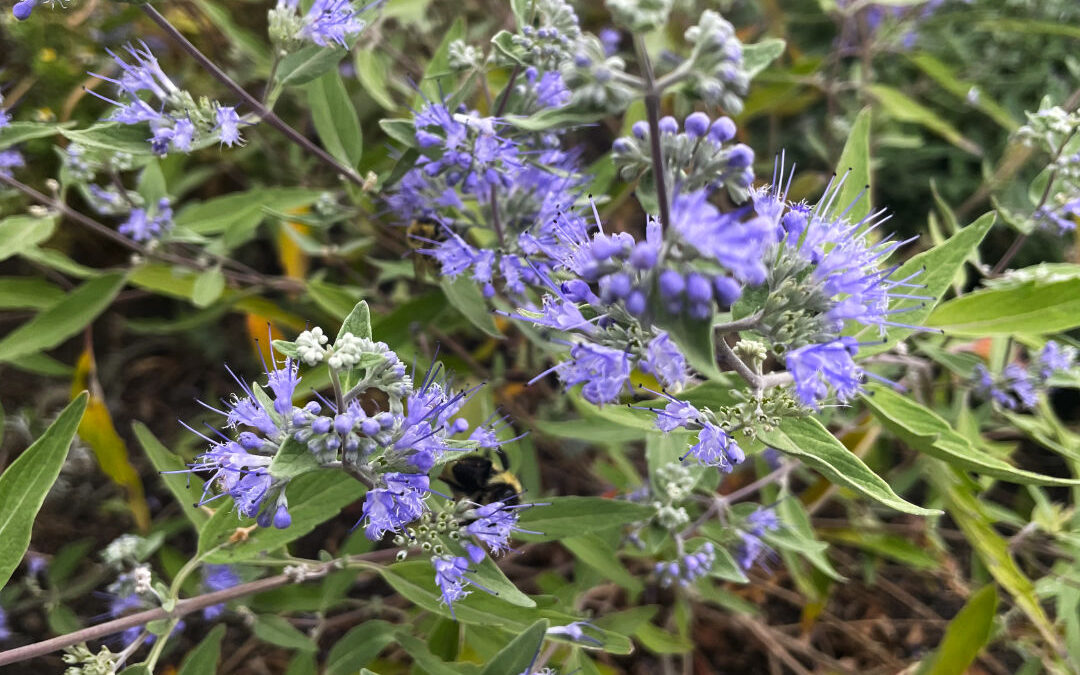
Just as many xeric gardens begin to fade in late summer, Caryopteris × clandonensis ‘Dark Knight’ comes into its own. Commonly called Bluebeard, Blue Mist or Blue Spirea, this compact deciduous shrub produces dense clusters of deep indigo-violet flowers from August well into October, bringing rich colour when little else is blooming.
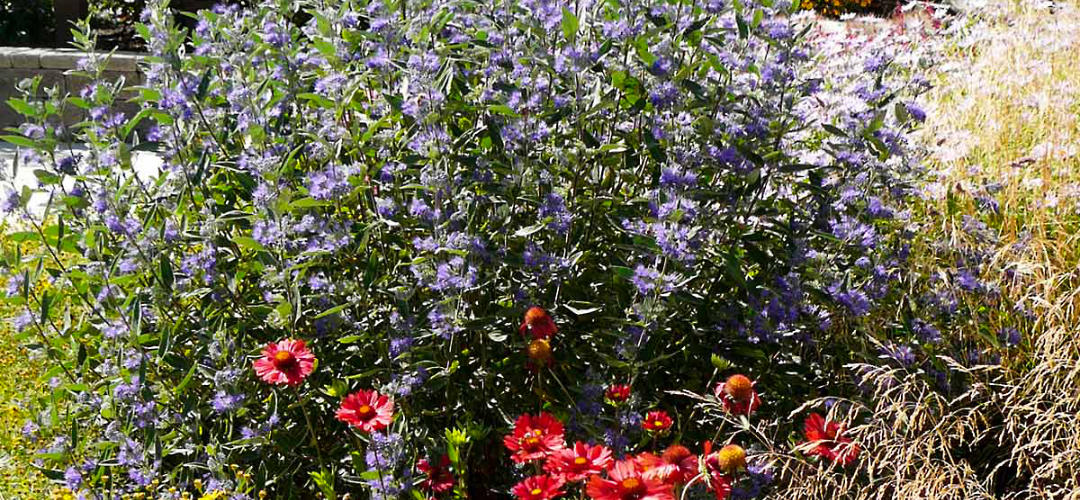
The foliage is as appealing as the flowers. Narrow, silvery-grey leaves release a pleasant, sage-like fragrance when brushed, and their pale colour is a classic drought-tolerance adaptation, reflecting intense sun and reducing water loss. The cultivar ‘Dark Knight’ typically reaches about 3 ft in height and width, making it a tidy choice for borders, rock gardens, and sunny slopes.
Why Caryopteris Thrives in the Okanagan
If you’re wondering about the name, the “× clandonensis” tells us this plant is a hybrid cross of two wild species, originally bred in Clandon, England. Its parent plants hail from the dry, rocky hillsides of China and Mongolia. Crossing them gave this shrub its incredible drought tolerance, love for lean soils, and affinity for intense summer sun– making it an absolute champion for Okanagan xeriscaping.
This shrub succeeds in conditions that challenge many other plants, thriving in full sun, heat, and lean, well-drained soil. Once established, it needs little supplemental water in the Okanagan, and heavy clay or overly rich soil is more likely to cause trouble than neglect.
Hardy to roughly zone 5, it suits most Okanagan sites, though a sheltered spot helps in colder pockets.
Bluebeard is not prone to any pest or disease but, as previously noted, may suffer crown rot in poorly drained soil. Its fragrant foliage is generally unbothered by deer.
Pruning Caryopteris ‘Dark Knight’ is simple. Because flowers form on new wood, cut stems back hard to 6 to 12 inches in early spring once new buds appear. Dieback after a cold winter is common and nothing to be concerned about as plants readily regrow from the base.
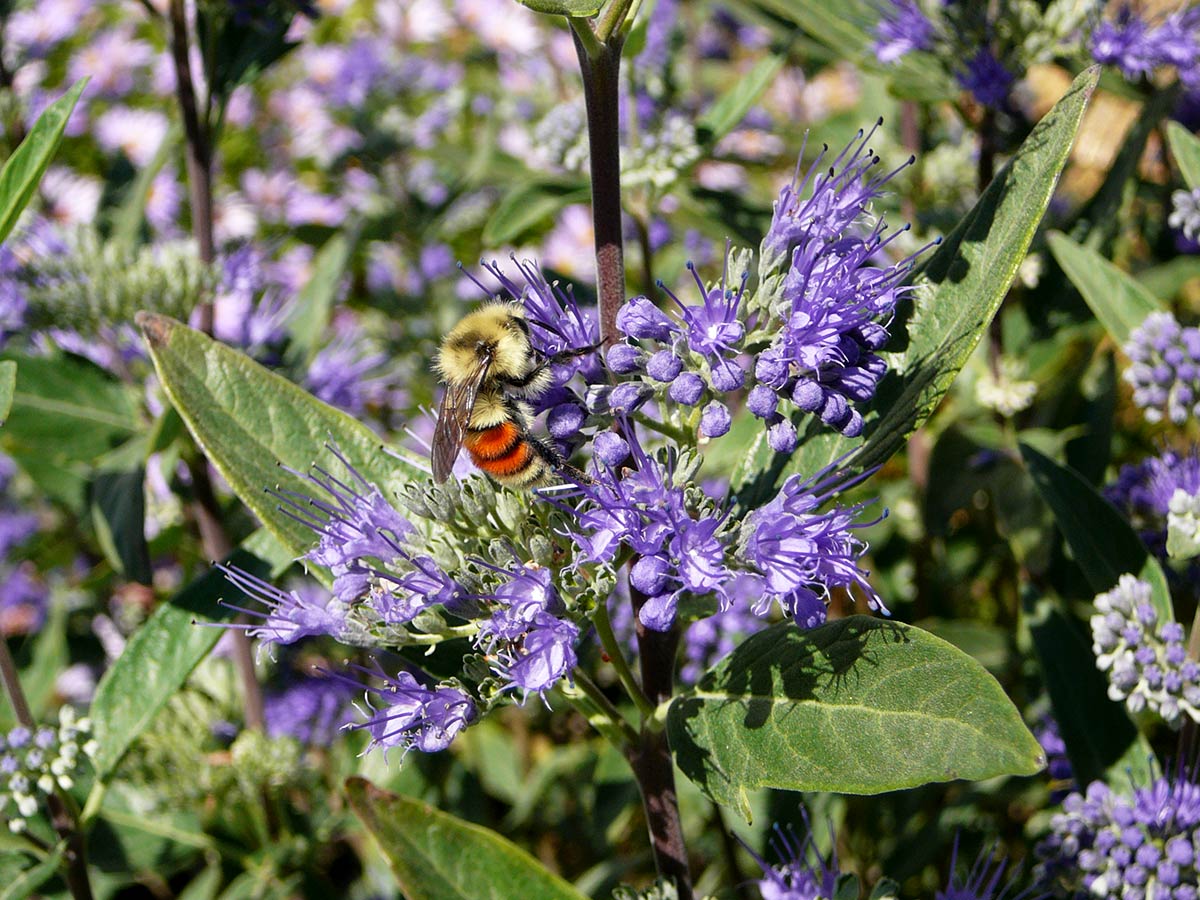
Pollinators flock to the blooms of Bluebeard, with bees, butterflies, and other beneficial insects relying on them for nectar when many other food sources have dwindled. This makes ‘Dark Knight’ a valuable late-season addition to a pollinator-friendly landscape. Gardeners who admire the look of Butterfly bush will appreciate that ‘Dark Knight’ offers similar pollinator appeal without the invasiveness concerns associated with Buddleja davidii in British Columbia.
Pair Caryopteris × clandonensis ‘Dark Knight’ with Sedum ‘Autumn Joy’, ornamental grasses such as Schizachyrium scoparium, or yellow-flowered Solidago for a vibrant autumn display that asks very little in return.
Our Plant Database features more than 500 plants tested and ideally suited for the unique challenges of gardening in the Okanagan’s extreme climate, including the plants in this article.