
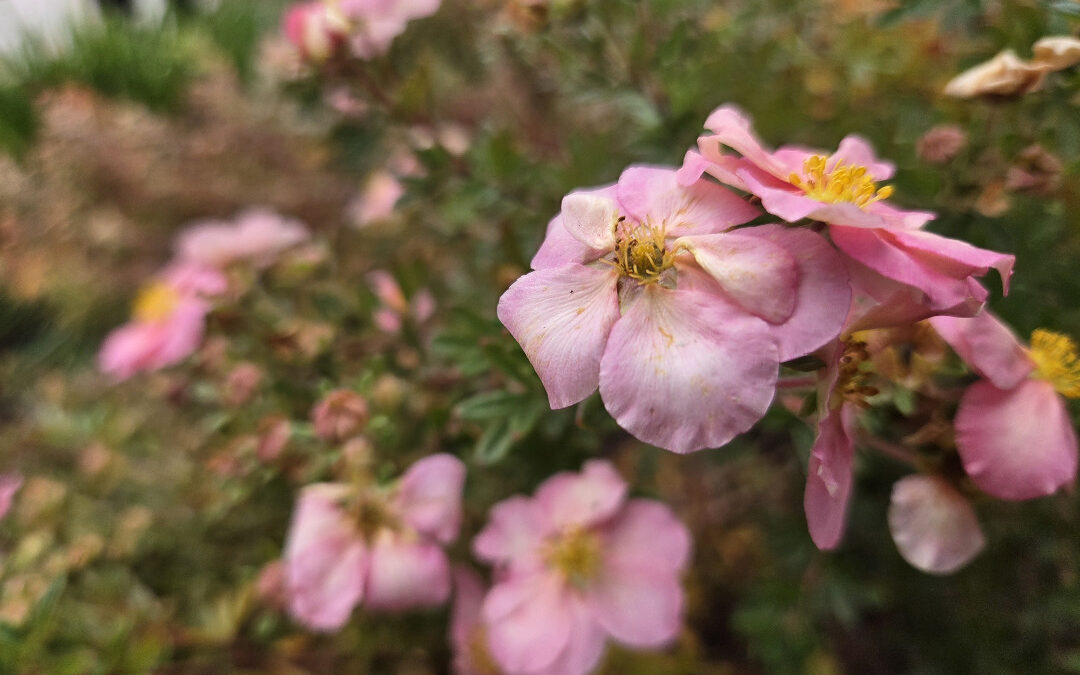
PLANT OF THE MONTH- November
by Sigrie Kendrick
Potentilla fruticosa
Shrubby cinquefoil or Bush cinquefoil
Few shrubs perform as well with so little water as Potentilla fruticosa, known commonly as Shrubby cinquefoil or Bush cinquefoil. Botanists now place the species in the genus Dasiphora, but the older name remains standard on plant tags, in garden centres, and throughout the landscape industry. The cultivar currently blooming in the UnH2O garden, ‘Pink Beauty’ brings a softer palette to a family better known for bright yellow blooms.
This cultivar forms a tidy, rounded shrub about 60 to 90 cm tall and wide, with fine, silvery-green foliage. From early summer until frost, it carries semi-double, pale pink flowers resembling wild roses that suit both cottage-style and modern xeric plantings. Bees and other small pollinators readily visit the open blooms.
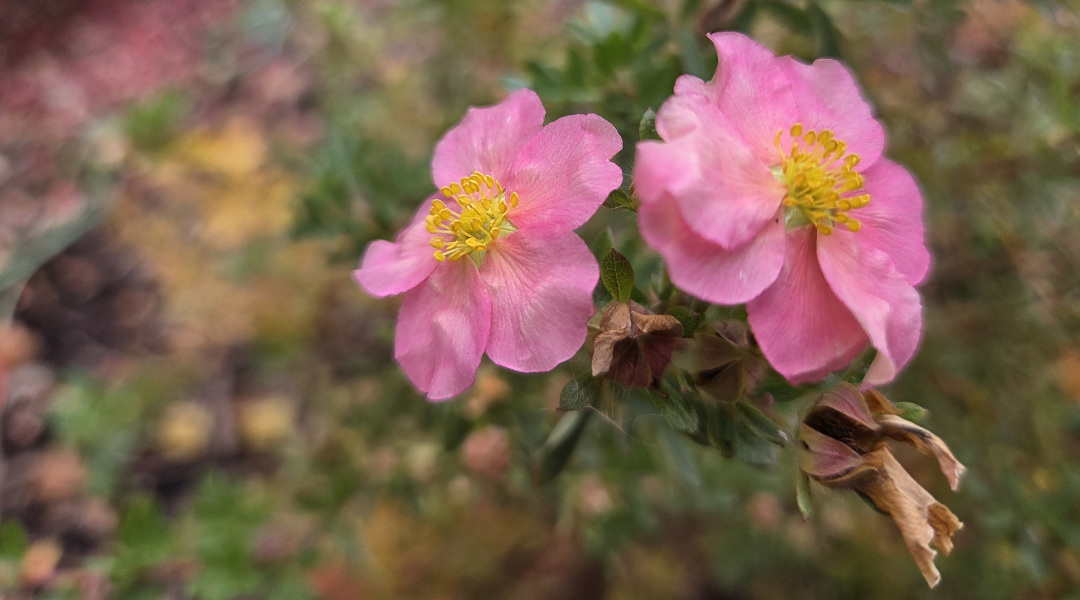
Shrubby cinquefoil is native to all Canadian provinces and territories, and ‘Pink Beauty’ inherits this resilience. It is hardy in zones 2-7 and tolerates poor, rocky, or alkaline soil. Potentilla fruticosa needs good drainage far more than fertility. After its first season of establishment, it thrives on infrequent, deep watering, which makes it an excellent choice for Okanagan gardens.
Maintenance for ‘Pink Beauty’ is minimal. Every few years, remove about a third of the oldest stems at ground level in early spring to keep growth dense and flowering vigorous.
Potentilla fruticosa is generally deer-resistant and seldom troubled by pests or disease.
This shrub is useful for low hedges, mixed borders, slopes, or foundation plantings. Pair it with Blue fescue, Salvia nemorosa, or silver-leaved Artemisia for a water-wise combination that looks good from June to November.
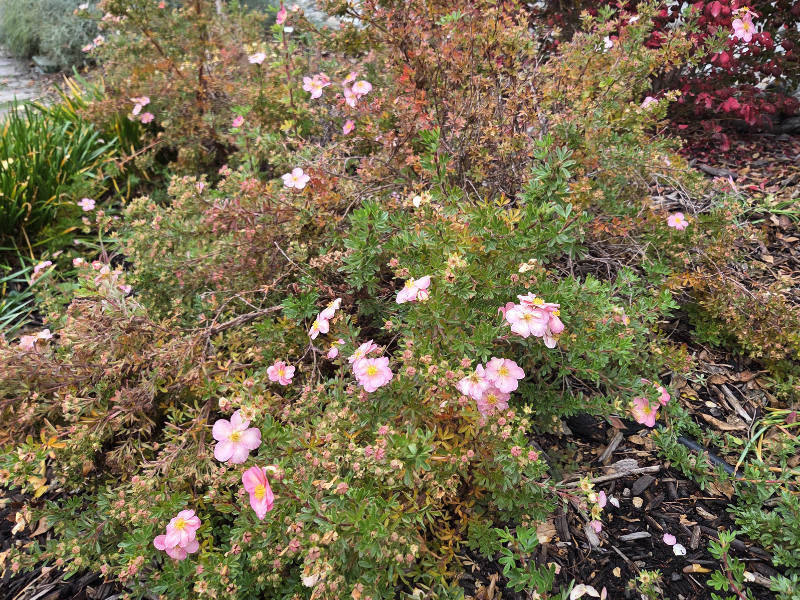
A tip regarding colour:
Pink-flowered potentillas fade toward creamy white in intense heat.
Ideally, plant ‘Pink Beauty’ where it gets morning sun and afternoon shade to keep the blooms their truest shade. An east-facing bed would work beautifully.
In full sun, expect paler flowers during July and August heat waves, though flowering continues and will return to pink as the temperature drops.
Our Plant Database features more than 500 plants tested and ideally suited for the unique challenges of gardening in the Okanagan’s extreme climate, including the plants in this article.