
PLANT OF THE MONTH- July
by Sigrie Kendrick
Buddleia davidii, Butterfly Bush
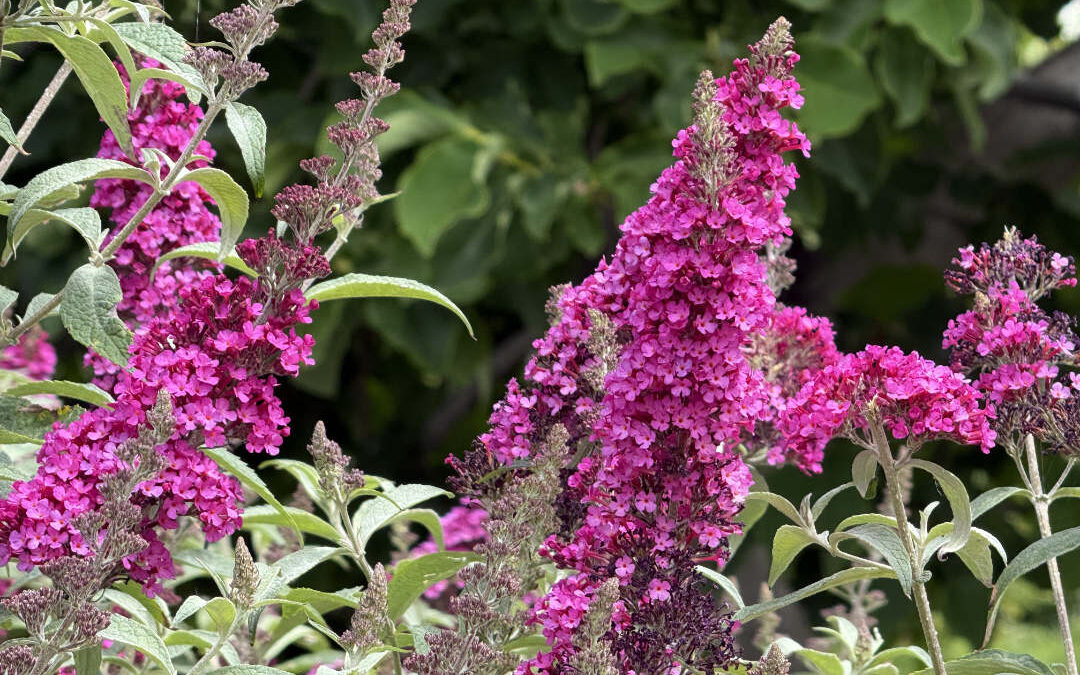
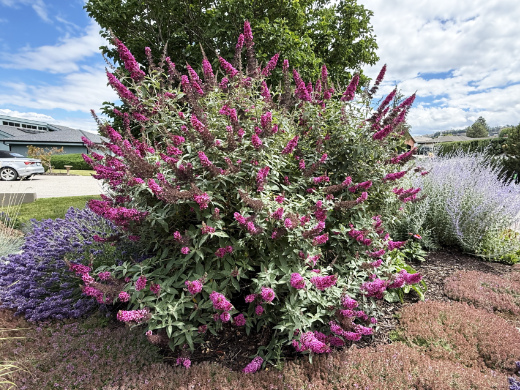
For xeriscapers seeking a compact, drought-tolerant shrub that pulls its weight for pollinators, Buddleia davidii (Butterfly bush) ‘Buzz Hot Raspberry’ deserves a close look. Bred as part of the dwarf Buzz series, this cultivar tops out at just 3 to 4 feet, making it a great choice for smaller water-wise beds where a full-sized butterfly bush would overwhelm the design.
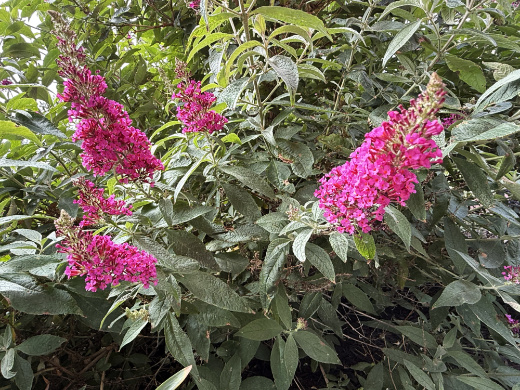
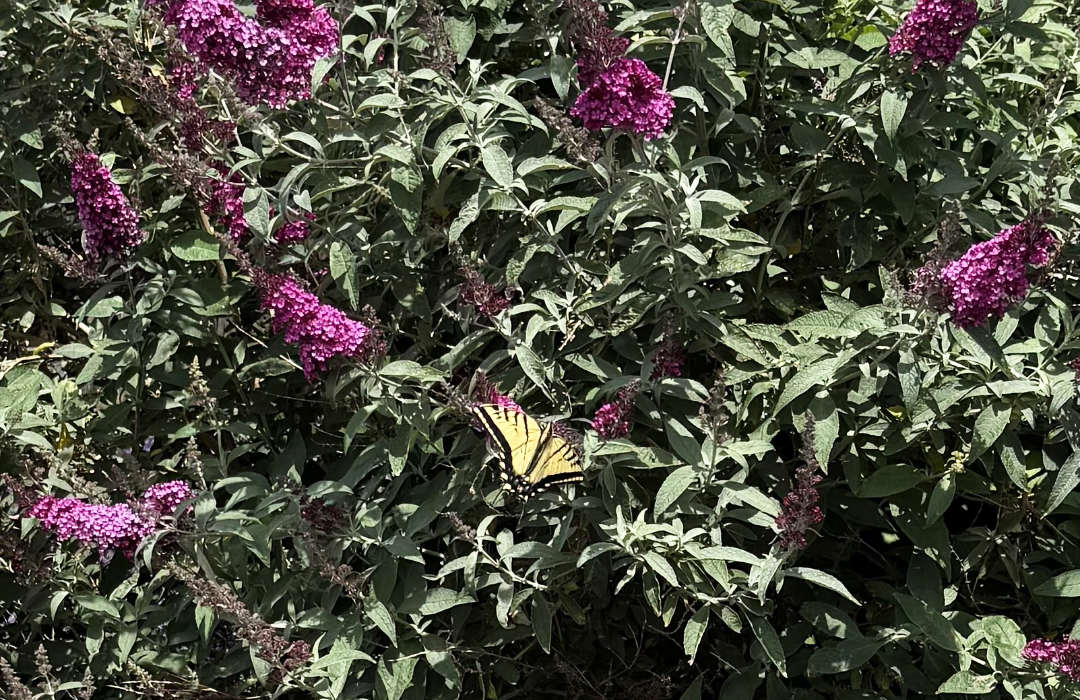
The appeal for pollinators is substantial. From early summer through fall, ‘Buzz Hot Raspberry’ produces long, fragrant, cone-shaped flower spikes in vivid magenta-pink. This nectar source draws honeybees, bumblebees, hummingbird moths, and a wide range of butterfly species, including swallowtails and red admirals. Once established, the plant asks for little except full sun, sharp drainage, and only occasional supplemental water, making it a fantastic addition to a drought-tolerant landscape.
A caveat belongs alongside the praise. While Buzz cultivars are marketed and bred for reduced seed production compared to the wild species, Buddleia davidii itself is documented as naturalized and locally invasive across parts of British Columbia, including sensitive Garry Oak ecosystems on Vancouver Island. Unlike a handful of confirmed sterile cultivars on the market, Buzz series plants are not verified seedless so responsible placement matters. Prompt deadheading before seed set, avoiding proximity to natural areas or waterways, and monitoring for volunteer seedlings are worthwhile practices for any gardener choosing this shrub.
Used thoughtfully, ‘Buzz Hot Raspberry’ can be a vibrant, high-reward addition to a contained residential xeriscape bed. Gardeners prioritizing ecological caution, however, may prefer to substitute native nectar shrubs such as Ceanothus velutinus or Philadelphus lewisii, which offer comparable pollinator benefits without the risk. of naturalization
Our Plant Database features more than 500 plants tested and ideally suited for the unique challenges of gardening in the Okanagan’s extreme climate, including the plants in this article.