
PLANT OF THE MONTH- June
by Sigrie Kendrick
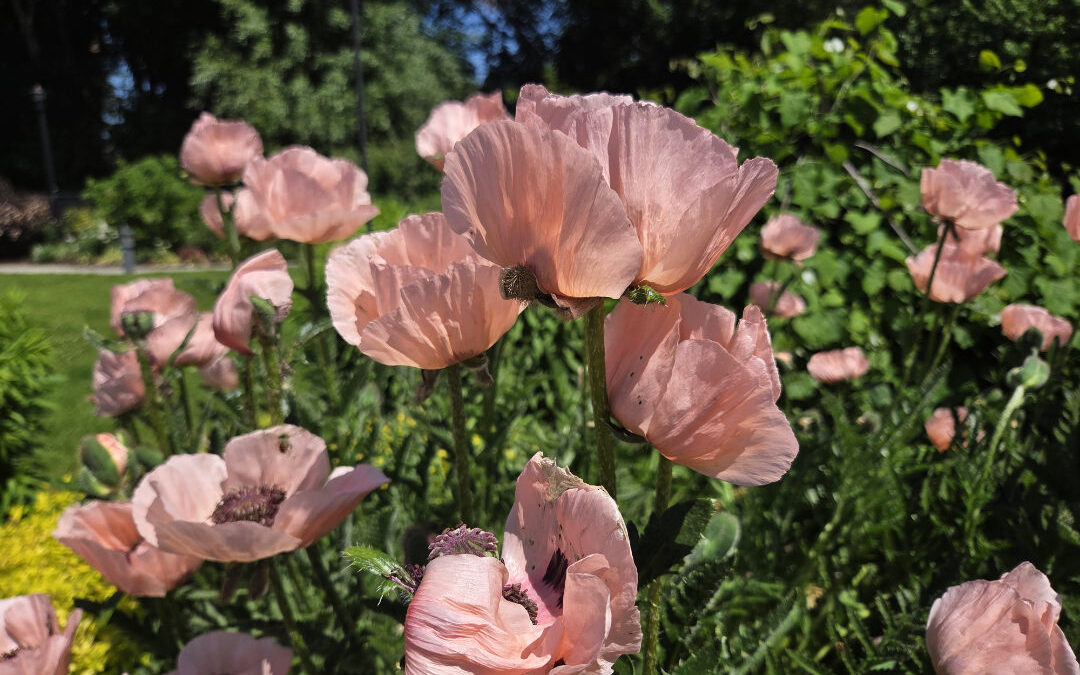
Papaver orientale, Oriental Poppy
Few plants announce the arrival of early summer quite like Papaver orientale, the Oriental poppy. With blooms that can reach the size of a dinner plate, this bold perennial has captivated gardeners for centuries and is an excellent fit for the Okanagan’s hot, dry summers.
Native to the meadows and hillsides of southwestern Asia, Oriental poppies are built for drought. They emerge in spring, producing deeply lobed, bristly grey-green foliage before sending up stiff stems topped with enormous, papery blooms. The flowers typically appear in late May through June in the Okanagan in colours ranging from fiery scarlet and orange to softer shades of salmon, pink, and white, usually with a dramatic dark blotch at the base of each petal. Although not particularly long-blooming, they are irresistible when in flower.
After flowering, the foliage dies back completely by midsummer, a quirk that catches some gardeners off guard. This summer dormancy is actually an advantage in xeriscape design as the plant requires virtually no water during its period of dormancy. Plan for this gap by surrounding Papaver orientale with late-season bloomers like Agastache cultivars (Hyssop), Salvia yangii (Russian sage), or ornamental grasses, which will fill in as the poppy vanishes.
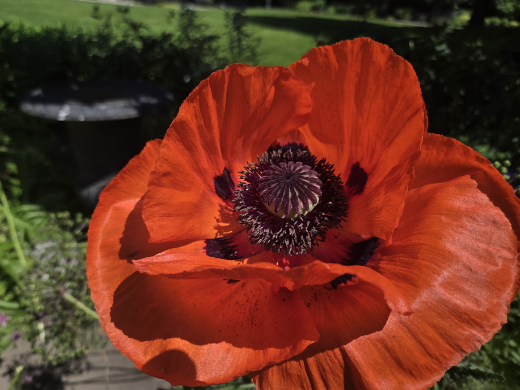
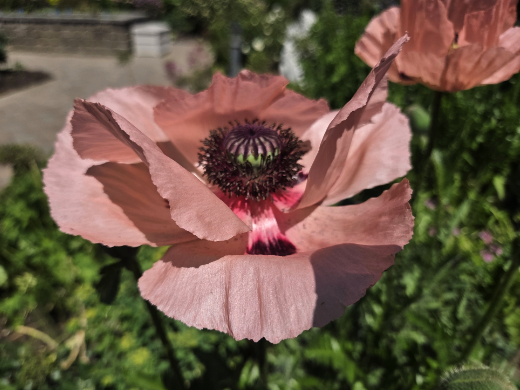
Oriental poppies thrive in full sun and well-drained soil, the sandier and leaner, the better. They dislike heavy clay and resent overwatering, making them a natural choice for our semi-arid Okanagan conditions. Once established, Papaver orientale are long-lived and reliably self-sufficient, returning larger and more floriferous each year.
Plant bare-root divisions in late summer or early fall, when the plant is dormant. Consider the site carefully as Oriental poppies develop a deep tap root, which allows them to access moisture deep within the soil. The downside of this deep tap root means they are all but impossible to transplant. Plant it right, leave it alone, and prepare to be dazzled year after year.
An added bonus of Papaver orientale is that its fuzzy, prickly foliage is seldom browsed by visiting deer.
Our Plant Database features more than 500 plants tested and ideally suited for the unique challenges of gardening in the Okanagan’s extreme climate, including the plants in this article.