
the NATIVE PLANT advantage
Article by Gwen Steele
An area planted with Okanagan native species can be one of the lowest-maintenance options to replace a lawn area you are ready to let go.
Plants that thrive in our dry natural landscape are adapted to Okanagan climatic conditions, so once established, they should not need supplemental water.
Using native plants restores much-needed habitat for birds and other wildlife that we have displaced. Their visits add another interesting dimension to a garden.
There are many Okanagan native plants available.
(Three nurseries that specialize in these are Wild Bloom on Old Vernon Road in Kelowna, Xeriscape Endemic Nursery (XEN) on Hayman Road, West Kelowna, and Sagebrush in Oliver.)
Native Shrubs
Native shrubs, in sequence of bloom, begin in early April with saskatoon and Oregon grape. Wild currants (Ribes cereum) and gooseberries are next, followed by mock orange, then wild roses (Rosa woodsii) and snowberry. Ocean spray (Holodiscus dicolor) is later, and last is native elderberry (Sambucus caerulea).
In addition to providing nectar to pollinators, most of these shrubs produce berries to feed birds. With the exception of snowberry, all are also edible for humans.
I grew up eating delicious jelly made by my grandmother from berries in her Oregon grape hedge on Marshall Street.
If you have Ponderosa pines on your property, the native plant garden could centre around them. They do much better without irrigation, and it is hard to grow lawn under them.
Kinnickinnick and pussytoes are two ‘evergreen’, flat ground covers that grow under pines in the wild.
Most of the shrubs listed are found in association with pines.
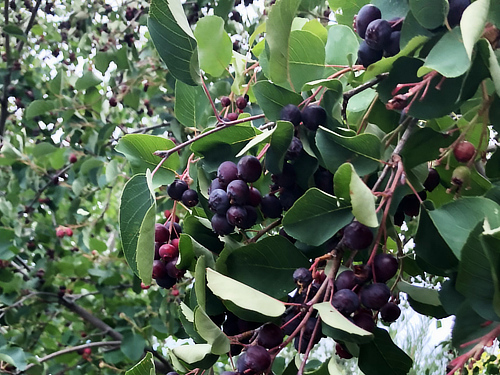
Saskatoon berries
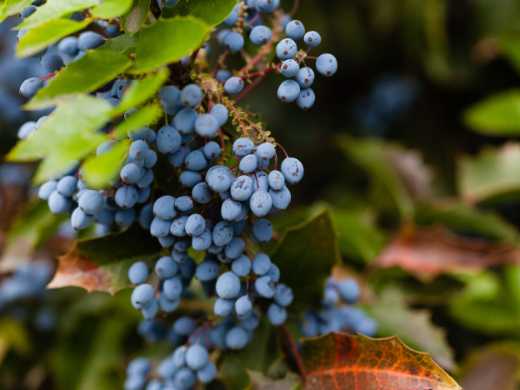
Oregon grape
Native Combinations
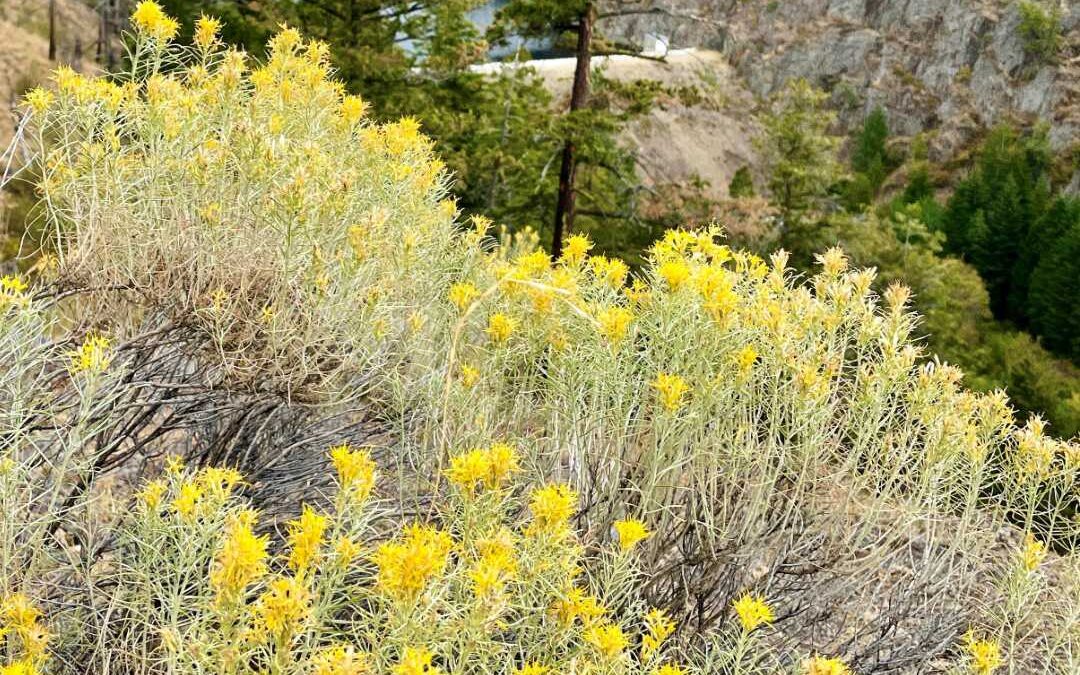
Big sagebrush (Artemisia tridentata) and rabbitbrush (Ericameria nauseosa) are two very attractive, extremely drought-tolerant shrubs. Both have silver foliage. Rabbitbrush blooms in summer through to fall with sulphur yellow flowers.
These are found on dry hillsides amongst bluebunch wheat grass, which goes into its tawny, dormant phase in the fall.
Some wildflowers to use to create a meadow with the bunch grass are early-blooming nodding onion (Allium cernuum); long-blooming showy aster, brown-eyed susan, blue flax (Linum perenne), golden aster (Heterotheca villosa), and yarrow.
Milkweed (Asclepias speciosa) can be added for butterflies.
Late-blooming pearly everlasting (Anaphalis margaritacea) and Aster ericoides add a touch of white.
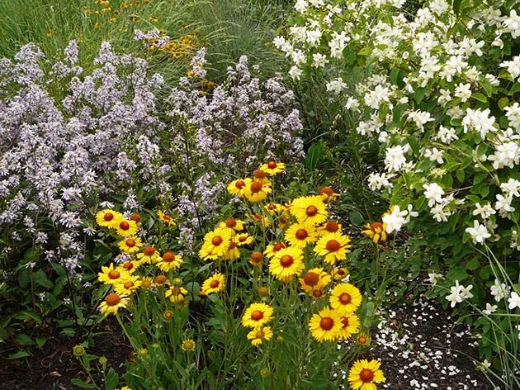
Late in May, a fragrant mock orange shrub (Philadelphus lewisii) blooms in the unH2O Xeriscape Garden. Yellow brown-eyed susans (Gaillardia aristata) and blue showy asters (Aster conspicuus) will continue blooming until late fall.
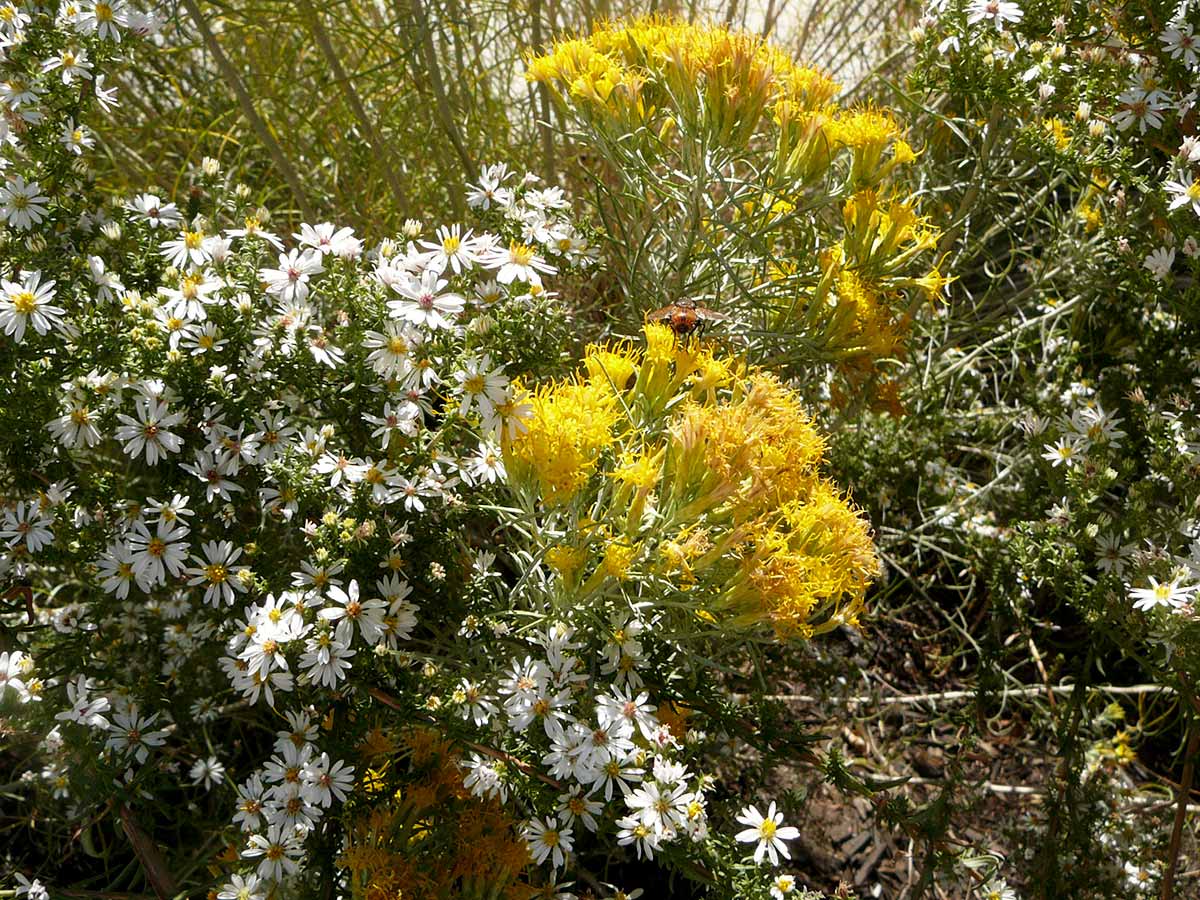
Close-up of heather aster (aster ericoides) and rabbitbrush (Ericameria nauseosa)– striking companions in the garden.
Let the Natural Environment Guide You
To narrow down which Okanagan Native Plants would do well with your specific site conditions, take note of how sunny it is and whether the soil is sandy/gravelly/fast-draining or clay-like/water-retentive. Then find areas in the wild that have similar conditions and see what is growing there. If you happen to have a stream or pond you are planting adjacent to, check out riparian areas such as Mission Creek Greenway or local ponds.Check the OXA plant database for more native plants, photos, and extensive details about each species.
This article was written by Gwen Steele for her gardening column in the Capital News from 2011 to 2018.
Gwen co-founded the Okanagan Xeriscape Association to bring water-wise gardening education to Okanagan Valley residents. She was the executive director for its first ten years.
Gwen was also co-owner of the first xeriscape nursery in the Okanagan where many plants were trialed for drought tolerance in the UnH2O demonstration gardens. This information formed the basis for our plant database.