
Colourful Blooms for your Okanagan Garden
Have you noticed that some flowers seem determined to keep summer going by blooming into Fall? Even as the days shorten and many summer blooms begin to fade, there are plants that continue to bring stunning colour to the garden. Here are three favourites.
A note about bloom times: Bloom times can vary from year to year depending on weather and growing conditions. The dates in this article are a general guide for the Okanagan rather than a hard-and-fast schedule.
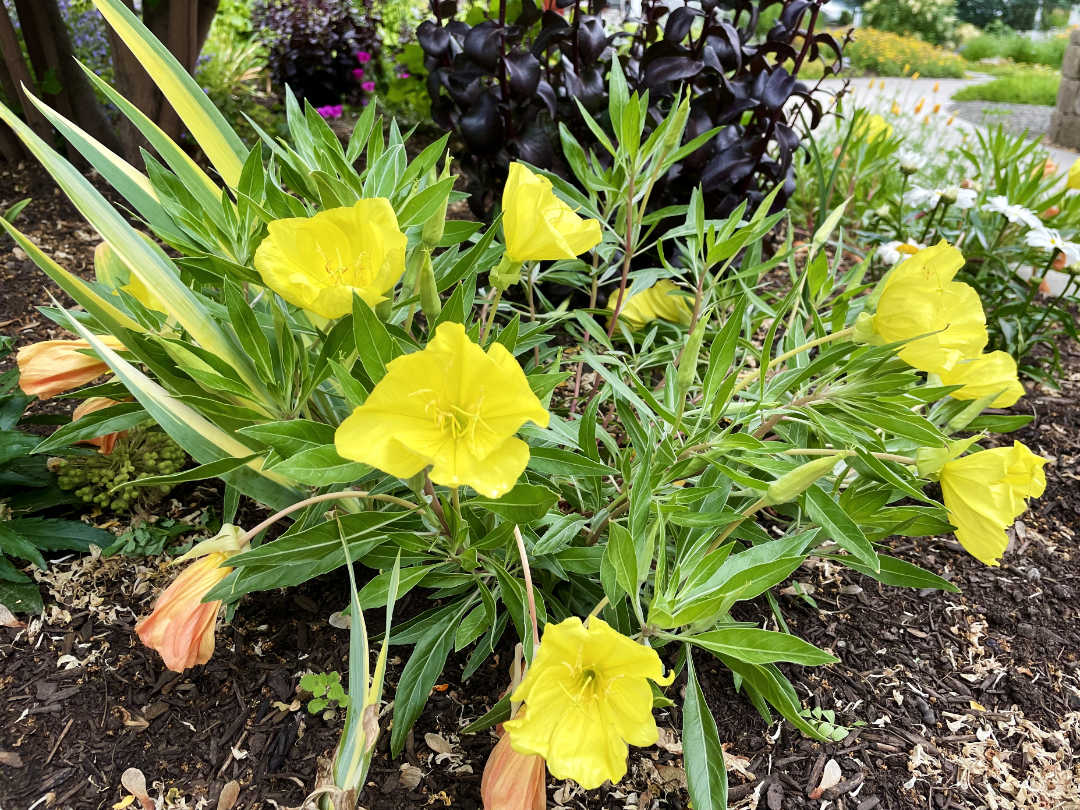
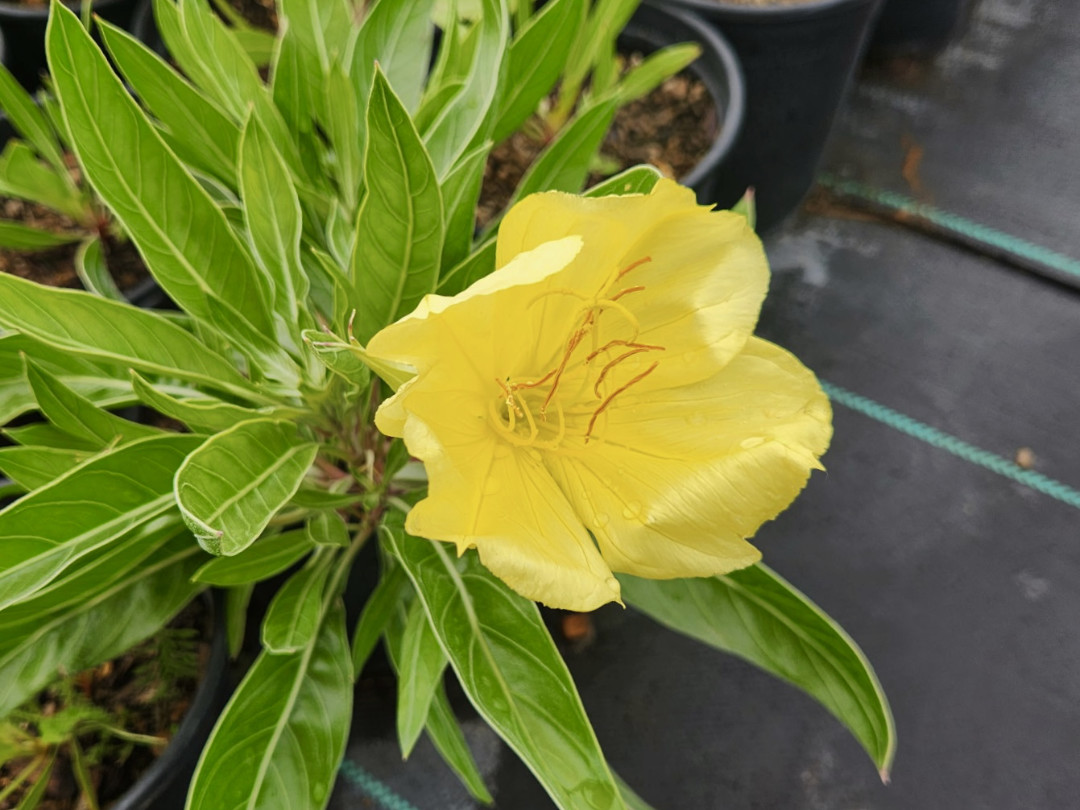
Missouri Evening Primrose (Oenothera macrocarpa)
Missouri Evening Primrose is a low-growing perennial that provides an exceptionally long blooming season from Spring right through late summer and into Fall. This plant produces immense, lemon-yellow flowers that open in the late afternoon and remain open until the following morning. While individual blossoms last for only a single day, each plant produces a relentless succession of new buds over many months, keeping garden borders vibrant through the heat of summer.
The sprawling stems feature narrow, glossy green leaves that form a dense, low-profile ground cover. The growth habit is low and spreading, reaching about 6 to 12 inches in height with a wide trail of up to 18 inches. This sprawling nature makes it a highly effective groundcover and a great choice for edging, rock gardens, sunny slopes, or cascading over the sides of containers. For a striking late-summer display, pair it with companions like Sedum or the fine textures of ornamental grasses.
Xeric Strengths: From Limestone Bluffs to the Okanagan
Non-native but perfectly suited to our climate, this perennial is endemic to the south-central United States, where it grows naturally on limestone glades, bluffs, and rocky hillsides. As a result, it thrives in full sun to partial shade and easily tolerates poor, rocky soils and severe drought. Unlike many drought-tolerant plants, it is also surprisingly tolerant of clay soils, provided the area doesn’t sit completely waterlogged.
Okanagan gardeners facing heavy wildlife pressure will appreciate that its textured foliage is highly deer and rabbit resistant. Additionally, its unique late-day opening ritual provides a valuable ecological service, attracting native bees in the early morning and large, nocturnal hawk moths at dusk.
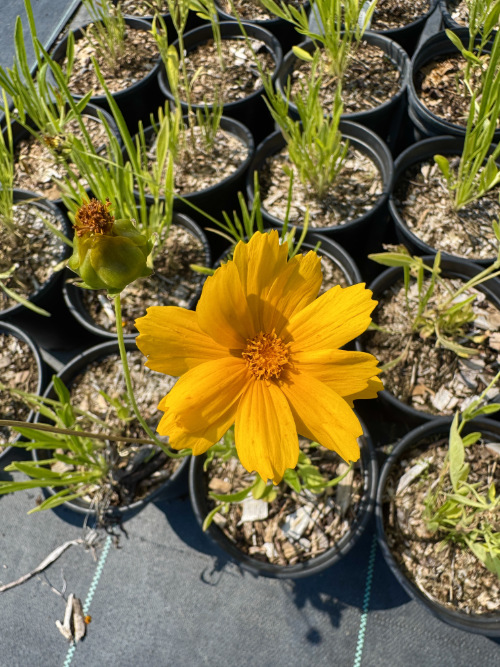
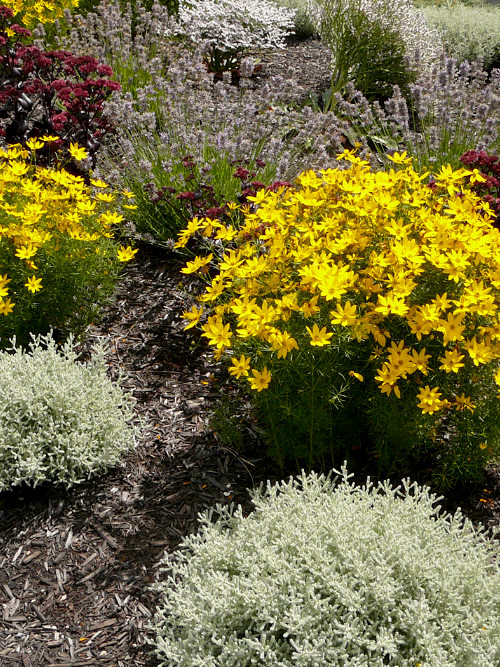
Lanceleaf Tickseed (Coreopsis lanceolata)
Providing a cheerful burst of early-season colour, Lanceleaf Tickseed is a reliable, clump-forming perennial that kicks off the long-blooming season from April through June. This plant produces vibrant, daisy-like yellow flowers that stand out beautifully against its deep green foliage. It is an exceptionally quick grower, making it a valuable addition for gardeners looking to establish immediate color and structure in a newly planted xeric landscape.
This perennial features a neat, upright habit, with the primary foliage clump growing 12 to 24 inches tall (stems can reach up to 3 feet when in full bloom) and stretching 12 to 18 inches wide. Because it grows from rhizomes, it naturally fills out over time to form an attractive, showy mass. It is a highly versatile choice for sunny borders, meadow-style plantings, and pollinator gardens. To prolong its cheerful display, simply deadhead spent blossoms throughout the spring to encourage a continuous succession of new buds.
Non-native but exceptionally adaptable, Lanceleaf Tickseed is endemic to the open woodlands, prairies, and meadows of the western and southeastern United States. This heritage makes it incredibly resilient; it thrives in dry locations and easily tolerates poor, rocky soils and drought. Remarkably, it is also highly adaptable to light conditions, tolerating everything from full sun to full shade– though a sunnier spot will yield the most abundant flush of spring blooms.
In addition to its tough nature, it offers excellent wildlife benefits. The bright blossoms act as a magnet for bees and butterflies, while the seed heads provide a valuable food source for local birds later in the season. Best of all for regional gardeners, its textured foliage is generally ignored by deer. It does self-seed, which is excellent for naturalizing a larger area, though minor weeding may be required if you prefer to keep it strictly contained.
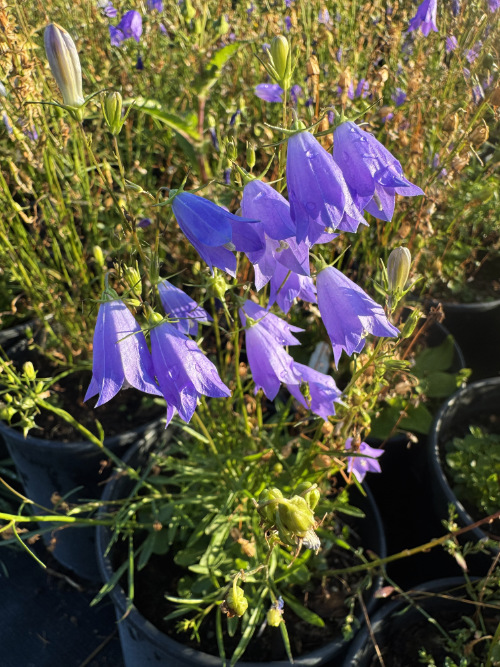
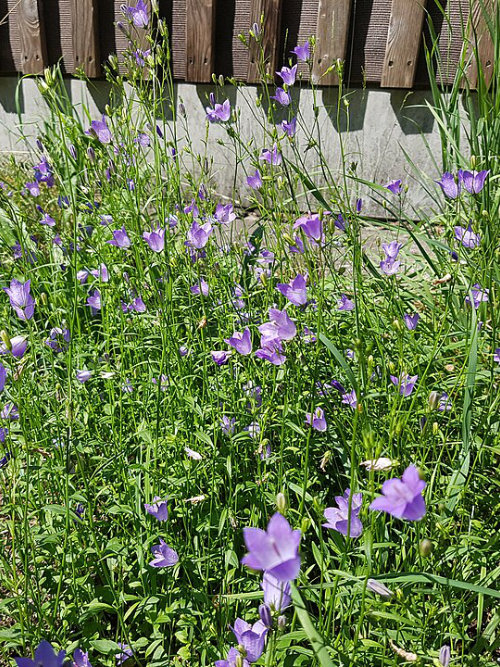
Common Harebell (Campanula rotundifolia)
Bringing a touch of delicate elegance to the garden, Common Harebell is a graceful, slender perennial that offers a remarkably long blooming window from June straight through September. This plant features a profusion of nodding, paper-thin, bell-shaped flowers in striking shades of blue and purple. While its paper-like blossoms look fragile, the plant is surprisingly resilient, continuously pushing out fresh waves of color for months on end to keep the landscape vibrant late into the summer season.
The growth habit is light and airy, with fine stems rising 4 to 30 inches in height. Because of its dainty nature, it is best utilized in mass plantings where its collective visual impact can truly shine. It is a highly versatile choice for cottage gardens, naturalized meadows, rock fissures, or as a softening element cascading over the edges of container arrangements. To maximize its performance, simply deadhead spent blossoms throughout the summer to encourage an even more prolific flush of new blooms.
As a native species to the Okanagan, this perennial is beautifully adapted to the local climate, growing naturally across a wide variety of habitats from low valleys up to subalpine elevations. It can be found tucked into grassy slopes, rocky gullies, moist forest openings, and open clearings. This diverse heritage makes it incredibly adaptable in the garden; it thrives in full sun to partial shade and effortlessly tolerates poor, rocky, and lean soils.
Beyond its easy-care nature, it brings fantastic ecological value to your yard. The bell-shaped flowers act as a magnet for hummingbirds and native bumblebees, providing a critical mid-to-late season food source. Best of all for regional gardeners dealing with local wildlife pressures, its unique textured stems and foliage are highly deer-resistant.
Cultivating Continuous Colour
By incorporating these long-blooming perennials into your garden, you can easily transition from the fresh energy of spring into the rich tones of autumn without missing a beat. Choosing xeric options like Missouri Evening Primrose, Lanceleaf Tickseed, and Common Harebell means your garden won’t just survive the hot Okanagan summers– it will actively thrive, providing a succession of vibrant blooms across multiple seasons. These tough, drought-tolerant options prove that a water-wise landscape can be just as lush, colourful, and dynamic as a traditional garden, all while saving water and supporting our local pollinators from dawn until dusk.